Home /
EMC Test Solutions

Conducted Immunity Test Systems

Surge, EFT/burst, dips, conducted RF, magnetic field and automotive supply test systems, each explained by the test it runs.

Real electrical disturbances, from a lightning surge on a power line to a relay switching nearby or a voltage dip during a grid fault, reach a product through its cables. Conducted immunity tests reproduce each of them on the product's power and signal lines to show it keeps working.

Each disturbance has its own standard and its own generator. This range covers surge, EFT/burst, ring wave and damped oscillatory wave generators; voltage dip and low-frequency immunity systems; conducted RF and bulk current injection; magnetic field generators; and the automotive and avionics supply tests in ISO 7637-2, ISO 16750-2 and DO-160 Section 17. All are from LISUN, most with built-in coupling networks.

Frequently Asked Questions

What's the difference between surge and EFT/burst testing?

Surge testing reproduces a single, higher-energy transient event like a lightning strike or major switching event, while EFT/burst testing reproduces a rapid series of lower-energy transient pulses typical of relay or switching contact bounce — both are real disturbance types a product's power and signal lines can encounter, but with different energy and repetition characteristics.

Why do conducted immunity tests need coupling/decoupling networks?

The coupling side puts the disturbance onto the power or signal line under test at the level the standard defines. The decoupling side stops it travelling back into the mains supply or the auxiliary equipment, so only the product under test sees it and the results are repeatable. Most LISUN generators have a CDN built in; the CDN61000-5 series covers higher-current and communication lines.

Which conducted immunity tests does a typical product need?

It depends on the product standard. Most mains-powered commercial and industrial products need surge (IEC 61000-4-5), EFT/burst (61000-4-4), voltage dips (61000-4-11) and conducted RF (61000-4-6), plus ESD and radiated immunity. Power plant and substation equipment adds ring wave, damped oscillatory, magnetic field and low-frequency tests; vehicle electronics use ISO 7637-2, ISO 16750-2 and ISO 11452-4 instead.

Conducted Immunity Test Systems
Inquire About This Range →

Which Conducted Immunity Tester Do I Need?

Each conducted immunity test reproduces one kind of disturbance and has its own standard, so you choose the generator by the test your product standard lists. Most mains-powered products need at least surge, EFT/burst, voltage dips and conducted RF, alongside ESD and radiated immunity. Find your test below.

Go toYour testing
SurgeLightning and switching surges on power and signal lines (IEC 61000-4-5)
EFT / burstFast switching transients (IEC 61000-4-4)
Voltage dipsDips, interruptions and variations (IEC 61000-4-11, 61000-4-34)
Conducted RFRF injected onto cables (IEC 61000-4-6)
Power frequency magnetic field50/60Hz magnetic fields (IEC 61000-4-8)
Ring wave100kHz ring wave (IEC 61000-4-12)
Damped oscillatory waveSubstation switching (IEC 61000-4-18)
Impulse and damped magnetic fieldSubstation and lightning fields (IEC 61000-4-9, 61000-4-10)
Common-mode low frequencyDC to 150kHz common mode (IEC 61000-4-16)
Differential-mode low frequency2 to 150kHz on AC ports (IEC 61000-4-19)
Bulk current injectionVehicle harnesses (ISO 11452-4)
Automotive transientsVehicle supply pulses (ISO 7637-2)
Automotive supply testsISO 16750-2, VW 80000, LV 124
Avionics voltage spikeDO-160 Section 17
Component surgeTVS diodes and protection parts
Insulation impulseIEC 60255-5 and PV modules (IEC 61730-2)

Surge and impulse

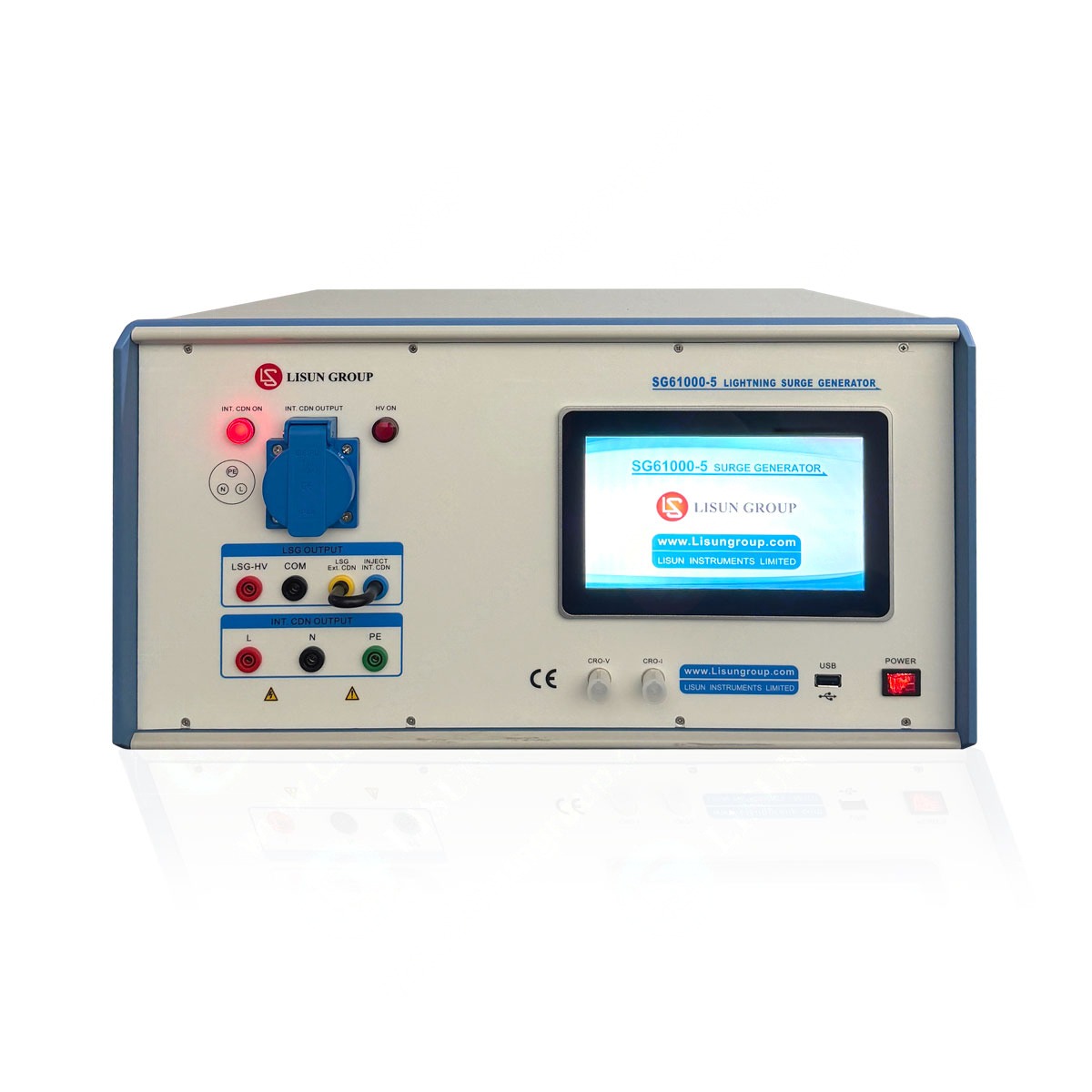
Combination Wave Surge GeneratorSG61000-5 series

Combination Wave Surge Generator

What it is: Simulates the surge a lightning strike or large switching event puts on power and signal lines: a high-energy 1.2/50µs voltage and 8/20µs current pulse. This is the surge test in almost every product EMC standard.

Use it for:

  • CE and EMC compliance on mains-powered products
  • Telecom lines with the 10/700µs SG61000-5C
Output0–4.8kV up to 0–15kV; to 7.5kA (higher on request)
Waveform1.2/50µs and 8/20µs; 10/700µs (5C)
CouplingBuilt-in single or three-phase CDN
StandardsIEC 61000-4-5, ANSI C62.41

Full details →

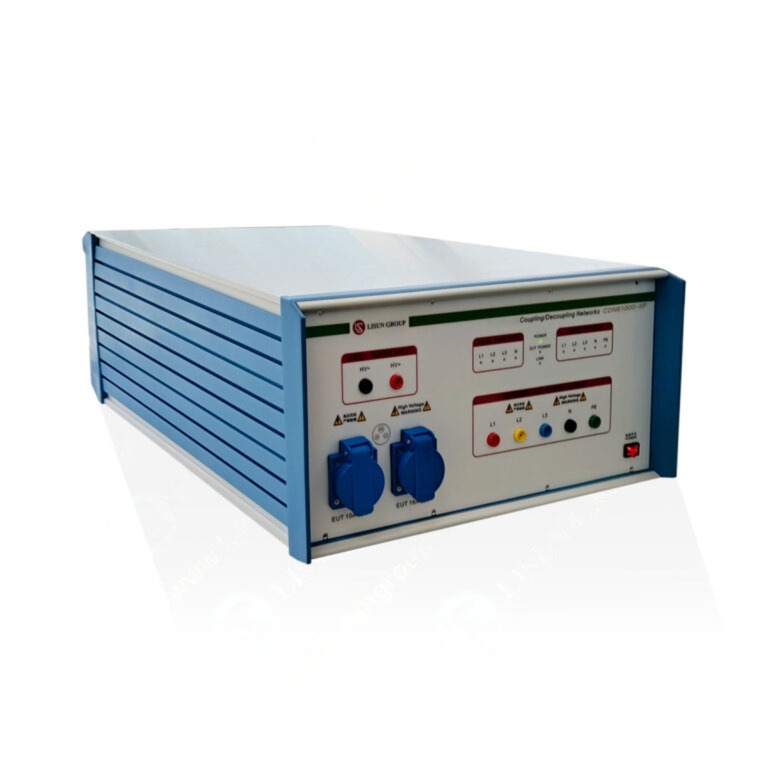
Surge Coupling/Decoupling NetworksCDN61000-5P / 5C

Surge Coupling/Decoupling Networks

What it is: Feeds the surge onto a line that the generator's built-in coupler can't handle, such as a 100A three-phase supply or Ethernet, CAN and RS485 lines, while protecting the auxiliary equipment.

Use it for:

  • Three-phase equipment to 100A
  • Communication and signal ports
Power3-phase 440V to 100A (5P)
SignalEthernet, CAN, RS485 and other lines (5C)
StandardsIEC 61000-4-5, IEC 61000-4-12, ITU-T K.20/K.21

Full details →

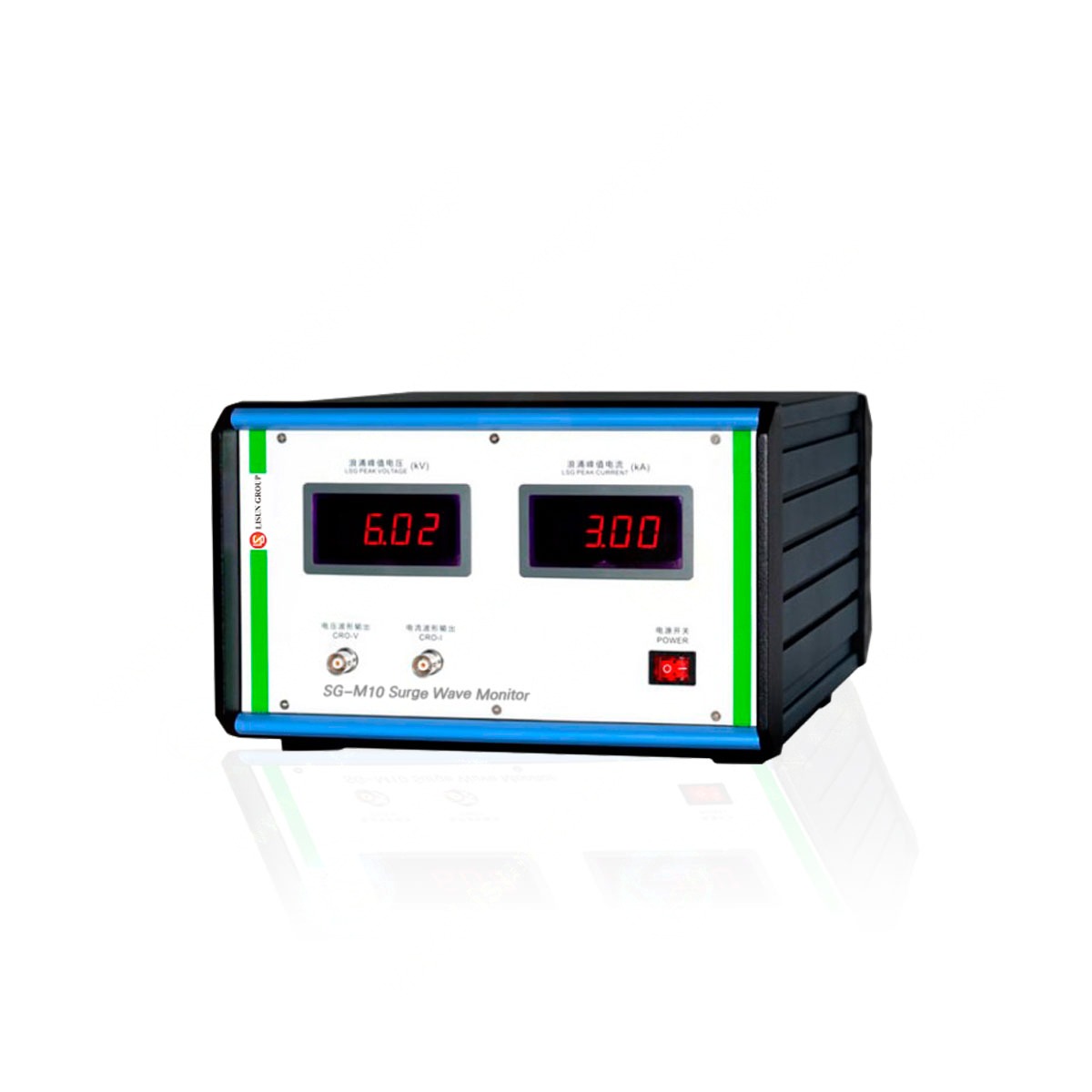
Surge MonitorSG-M10

Surge Monitor

What it is: Built-in voltage and current probes show the actual surge peak reaching the product, with BNC outputs to an oscilloscope, so you can verify the waveform during a test.

Use it for:

  • Checking surge levels and waveforms
  • Verifying generators between calibrations
Range±10kV, ±5kA; 1000:1
StandardsIEC 61000-4-5

Full details →

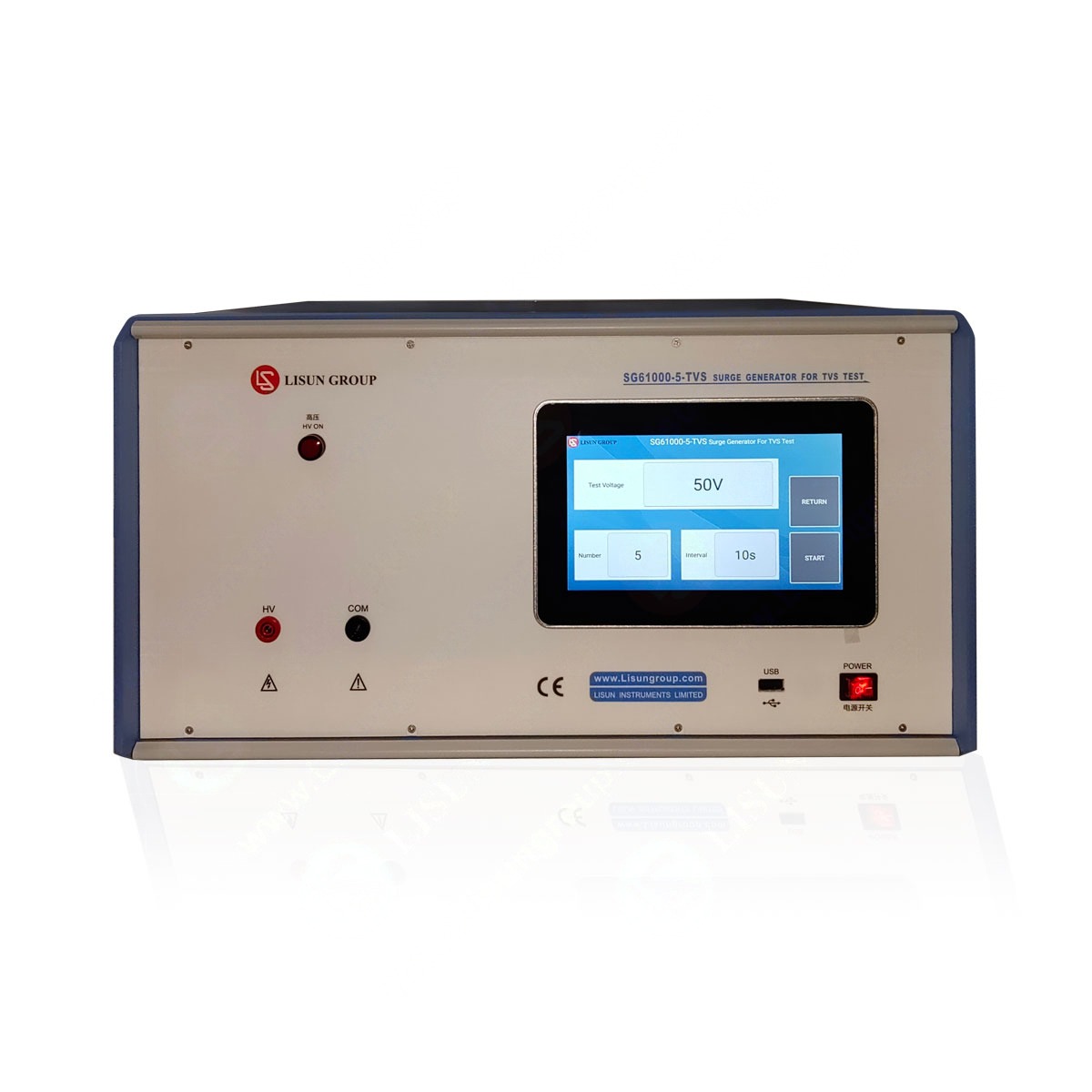
Low-Voltage Surge Generator for TVS PartsSG61000-5-TVS

Low-Voltage Surge Generator for TVS Parts

What it is: A surge generator scaled down for components: tests TVS diodes and other clamping parts with the IEC 61000-4-5 waveforms at low voltages and controlled currents.

Use it for:

  • TVS diodes, varistors and protection components
  • Component selection and incoming inspection
Output2–1000V; 1–500A
Impedance2, 12 or 40Ω
StandardsIEC 61000-4-5 waveforms

Full details →

Impulse Voltage GeneratorSUG255 series

Impulse Voltage Generator

What it is: Applies a 1.2/50µs high-voltage impulse to check insulation strength, rather than surge immunity. Used for relays, protection equipment and meters.

Use it for:

  • Protection relays and meters
  • Insulation coordination tests
Output0–12kV up to 0–30kV
Waveform1.2/50µs
StandardsIEC 60255-5, IEC 60060-1

Full details →

PV Module Impulse Voltage GeneratorSUG1250-15KV / 30KV

PV Module Impulse Voltage Generator

What it is: An impulse generator built for the large capacitance of solar panels, for the IEC 61730-2 impulse voltage test (MST 14).

Use it for:

  • PV module safety qualification
Output3–15kV or 3–30kV
Load15–150nF module capacitance
StandardsIEC 61730-2 MST 14

Full details →

Fast transients and oscillatory waves

Electrical Fast Transient / Burst GeneratorEFT61000-4 series

Electrical Fast Transient / Burst Generator

What it is: Simulates the bursts of fast spikes caused by relays and contactors switching inductive loads, coupled onto power and signal lines.

Use it for:

  • CE and EMC compliance on almost every product
  • Three-phase equipment with the 32A and 100A versions
Output0–5kV or 0–6kV; 1kHz–1MHz
Waveform5/50ns
CouplingBuilt-in CDN, 16A, 32A or 100A
StandardsIEC 61000-4-4

Full details →

Ring Wave GeneratorRWG61000-12 series

Ring Wave Generator

What it is: Produces the 100kHz ring wave that switching in low-voltage mains networks causes, a requirement in some product and North American standards.

Use it for:

  • Mains-powered equipment, meters and controls
Output4kV or 6kV; 12Ω / 30Ω
CouplingBuilt-in single or three-phase CDN
StandardsIEC 61000-4-12, ANSI C62.41

Full details →

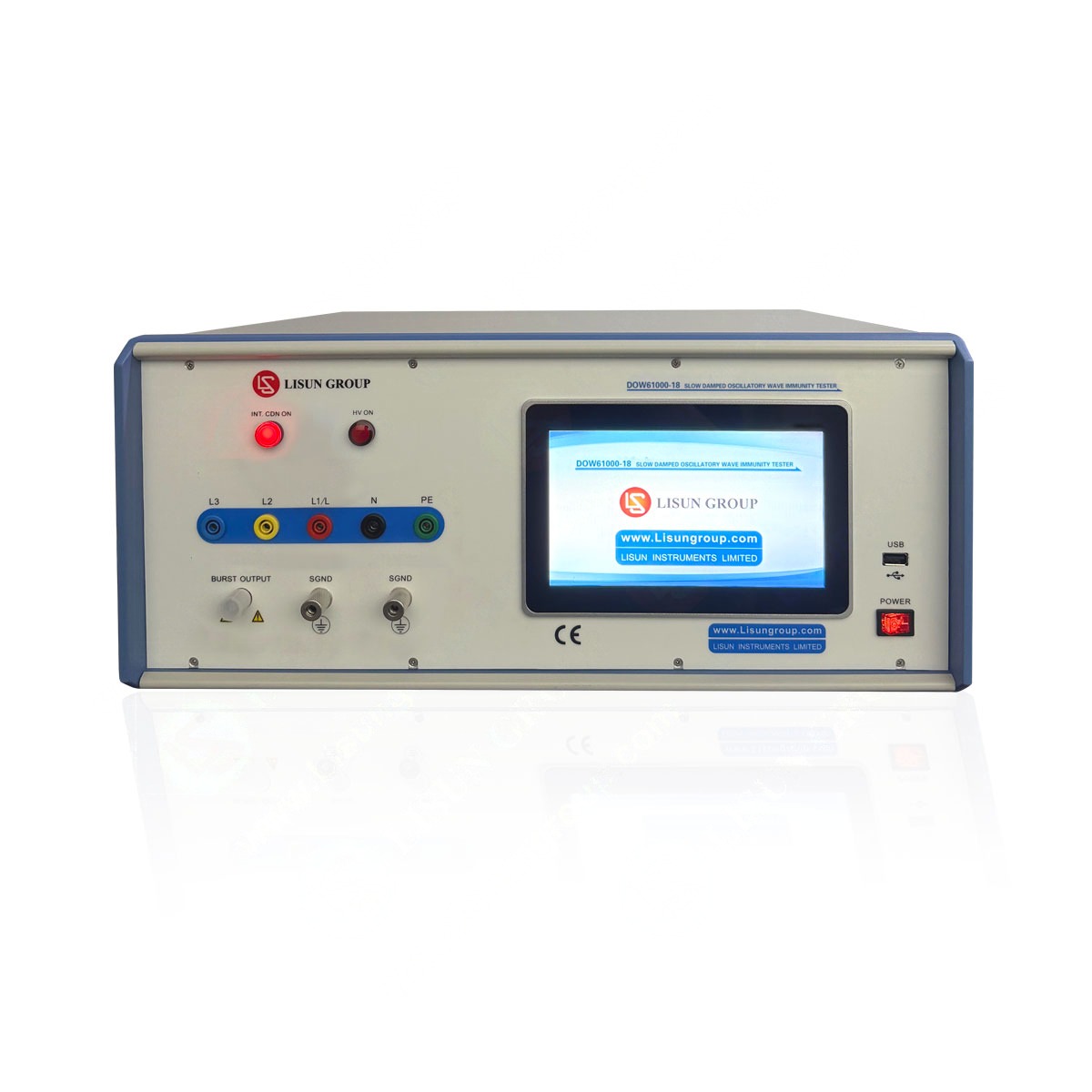
Damped Oscillatory Wave GeneratorDOW61000-18 / 18F

Damped Oscillatory Wave Generator

What it is: Reproduces the damped oscillations from switching in substations and power plants: slow waves at 100kHz and 1MHz, and fast waves at 3, 10 and 30MHz.

Use it for:

  • Substation and power plant equipment
  • Protection relays
Slow (18)200V–3kV at 100kHz / 1MHz
Fast (18F)450V–4.4kV at 3–30MHz
StandardsIEC 61000-4-18

Full details →

Mains quality: dips and low-frequency disturbances

Voltage Dip, Interruption and Variation GeneratorCSS61000-11 series

Voltage Dip, Interruption and Variation Generator

What it is: Drops, cuts and varies the mains voltage on cue to check the product rides through brown-outs and short outages the way its standard requires.

Use it for:

  • Single-phase products (IEC 61000-4-11)
  • Three-phase products to 100A (IEC 61000-4-34)
Range0–110% of supply
Rating1-phase 16A, or 3-phase to 100A
StandardsIEC 61000-4-11, IEC 61000-4-34

Full details →

Common-Mode Low-Frequency Immunity SystemLFCI61000-16

Common-Mode Low-Frequency Immunity System

What it is: Injects common-mode disturbances from DC to 150kHz, the kind caused by power-line currents and earth potential differences, with continuous, short-duration and sweep tests.

Use it for:

  • Industrial control and protection equipment
  • Instrumentation in power installations
Output0.1–30V continuous; 10–300V short duration
FrequencyDC, 16⅔, 50, 60Hz; 15Hz–150kHz sweep
StandardsIEC 61000-4-16

Full details →

Differential-Mode Low-Frequency Immunity SystemLFCI61000-19

Differential-Mode Low-Frequency Immunity System

What it is: Tests AC power ports against differential-mode voltage and current from 2kHz to 150kHz, the band where power-line communication and converter noise sit.

Use it for:

  • Smart electricity meters
  • Industrial controls, relays and power electronics
Voltage test0.1–30V, 2–150kHz
Current testUp to 6A
CouplingBuilt-in single-phase 16A CDN
StandardsIEC 61000-4-19

Full details →

Conducted RF immunity

Conducted RF Immunity SystemRFCI61000-6

Conducted RF Immunity System

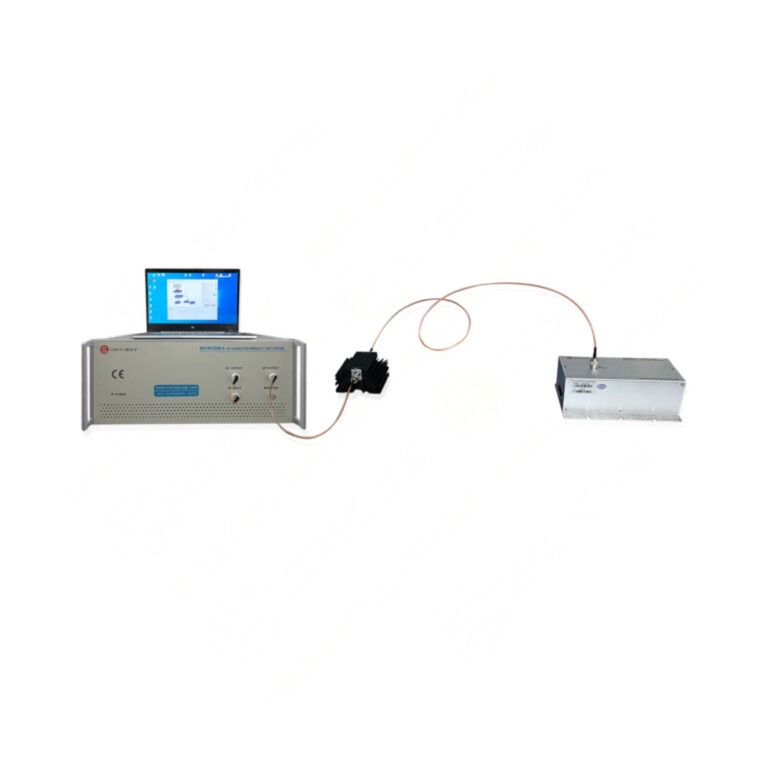
What it is: Injects radio-frequency interference onto cables through coupling networks, simulating the fields cables pick up from nearby transmitters. Generator, 85W amplifier, power meter and coupler in one unit.

Use it for:

  • Mains and signal ports on most products
  • CE and EMC compliance
Frequency150kHz–230MHz
Amplifier85W built in
StandardsIEC 61000-4-6

Full details →

Bulk Current Injection SystemLSBCI-40-100W / 120W

Bulk Current Injection System

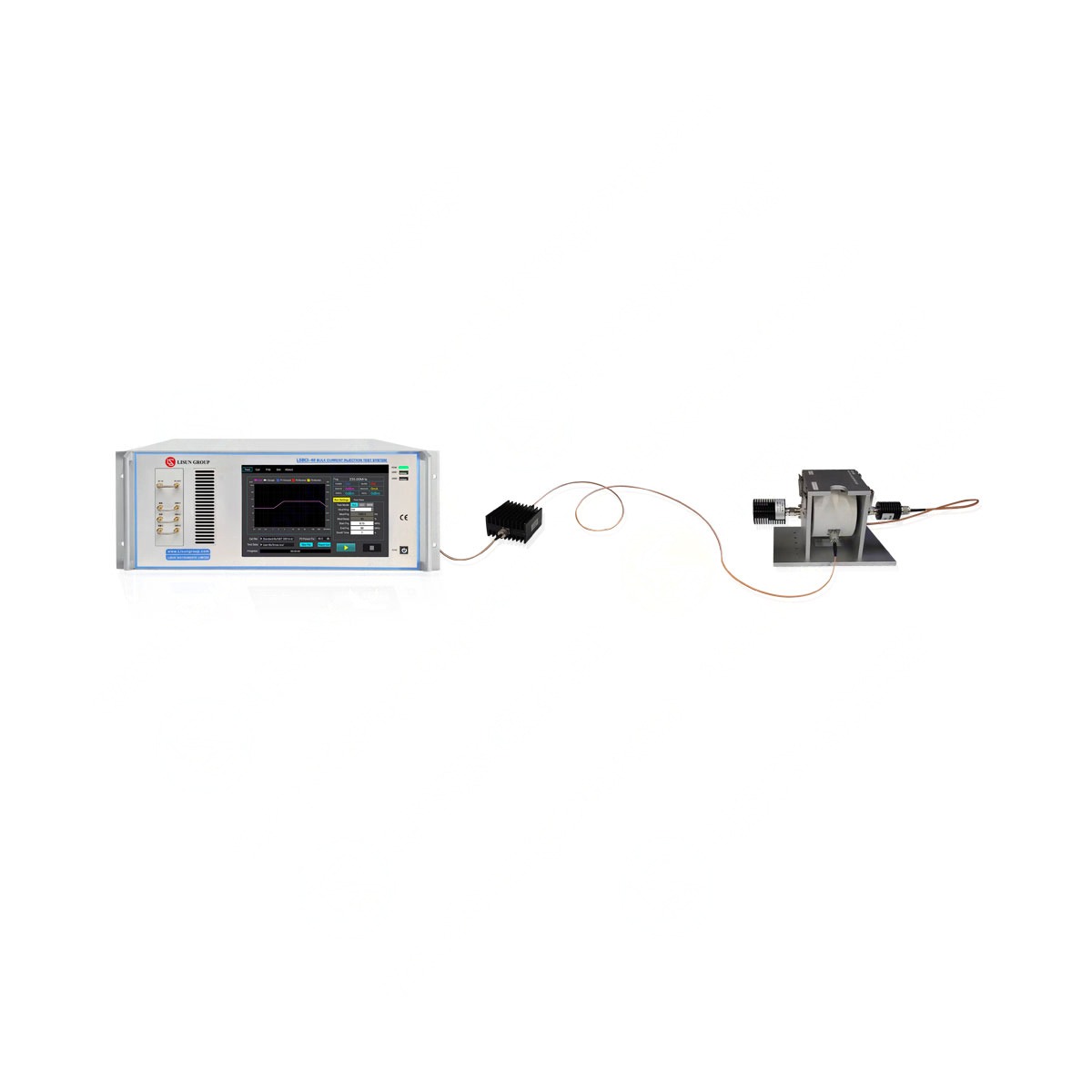
What it is: The automotive version of conducted RF immunity: an injection probe clamps around the wiring harness and drives RF current into it while the component runs.

Use it for:

  • Vehicle electronics to ISO 11452-4 and SAE J1113-4
  • Automotive component and module EMC qualification
Frequency100kHz–400MHz
Amplifier100W or 120W built in
StandardsISO 11452-4, SAE J1113-4
Also neededLIS-AN50A 5µH artificial network, BCI injection probe and calibration fixture

Full details →

EMC RF Power AmplifiersLS-PA series

EMC RF Power Amplifiers

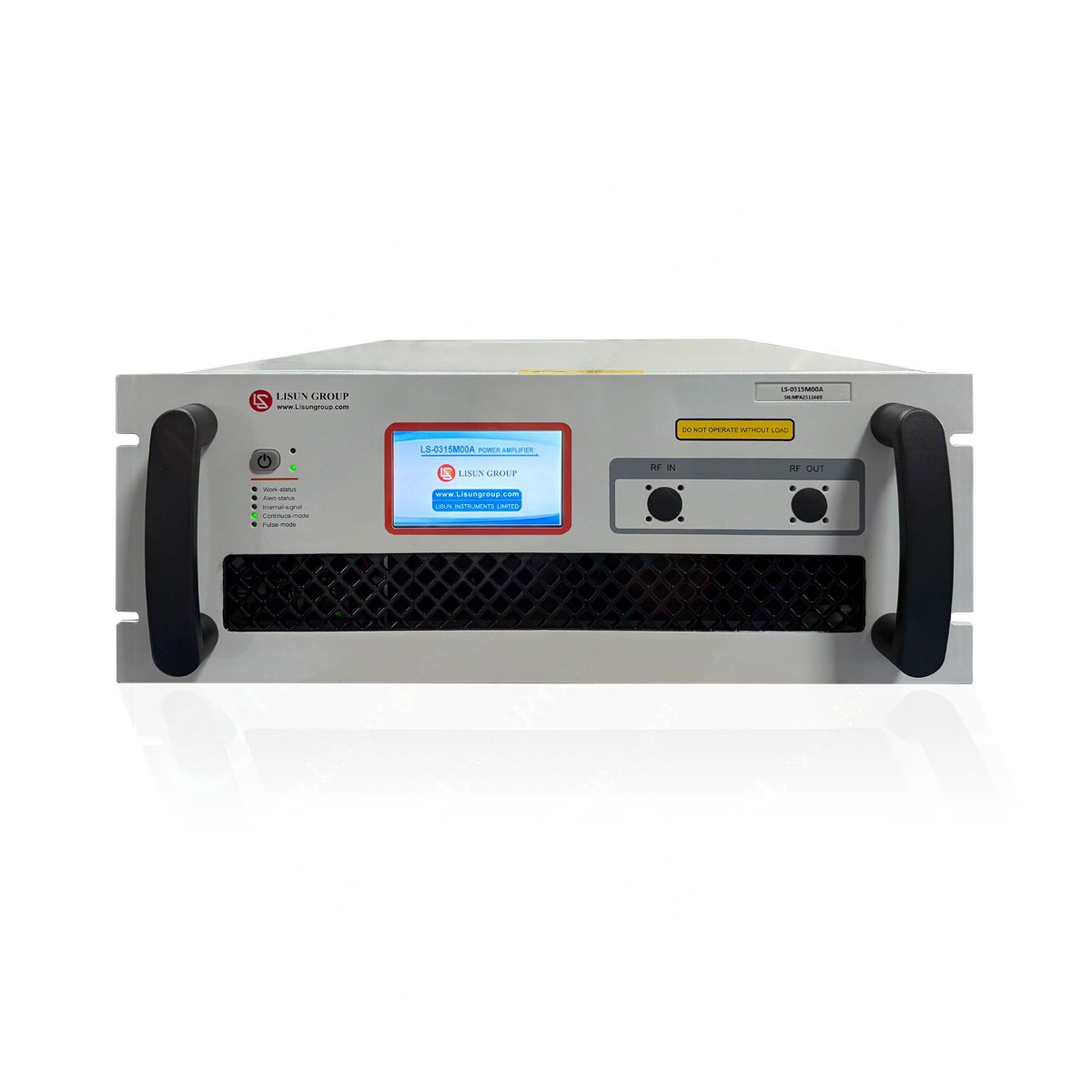
What it is: Stand-alone amplifiers to build or upgrade a conducted or radiated immunity system, matched to the frequency bands the IEC and ISO tests use.

Use it for:

  • IEC 61000-4-6 and ISO 11452-4 conducted tests
  • IEC 61000-4-3 radiated immunity
Frequency100kHz–18GHz across five models
Power80W to 300W (higher options)
StandardsIEC 61000-4-3, 61000-4-6, ISO 11452-4

Full details →

Magnetic field immunity

Power Frequency Magnetic Field GeneratorPFM61000-8A / 8B

Power Frequency Magnetic Field Generator

What it is: Surrounds the product with a 50 or 60Hz magnetic field from a 1m coil, like the field near transformers, busbars and power cables.

Use it for:

  • Meters, monitors and products with Hall sensors
  • Automotive components to ISO 11452-8
FieldUp to 1000A/m, 50/60Hz
Coil1m
StandardsIEC 61000-4-8, ISO 11452-8, MIL-STD-461G

Full details →

Impulse and Damped Oscillatory Magnetic Field GeneratorsIMF61000-9 / 9A, DOMF61000-10

Impulse and Damped Oscillatory Magnetic Field Generators

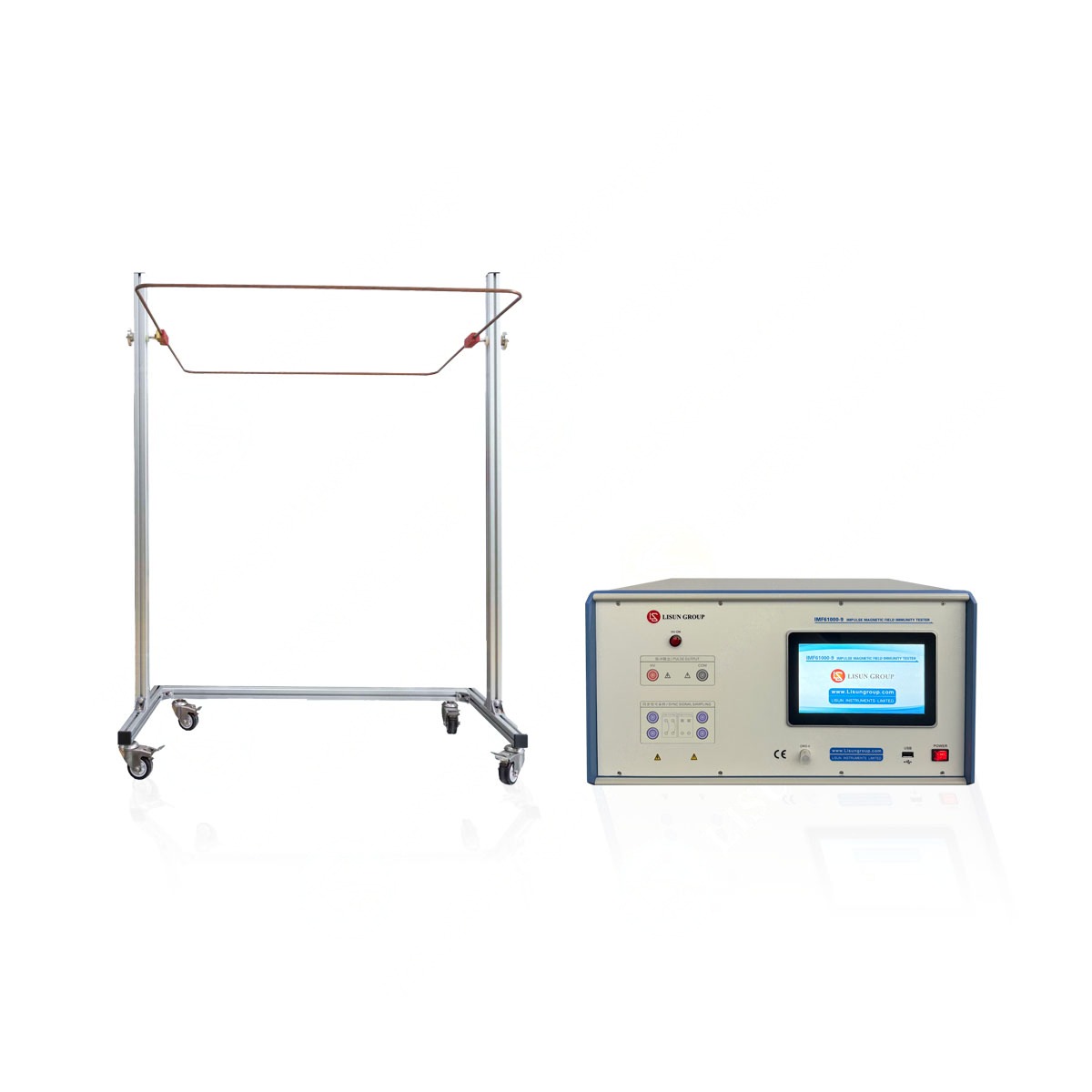
What it is: Generates the magnetic fields from lightning currents (impulse) and from switching in substations (damped oscillatory), for equipment installed in power plants and substations.

Use it for:

  • Substation and power plant equipment
  • Protection relays
ImpulseTo 1200 or 3000A/m
DampedTo 120A/m at 100kHz / 1MHz
StandardsIEC 61000-4-9, IEC 61000-4-10

Full details →

Automotive and aerospace supply tests

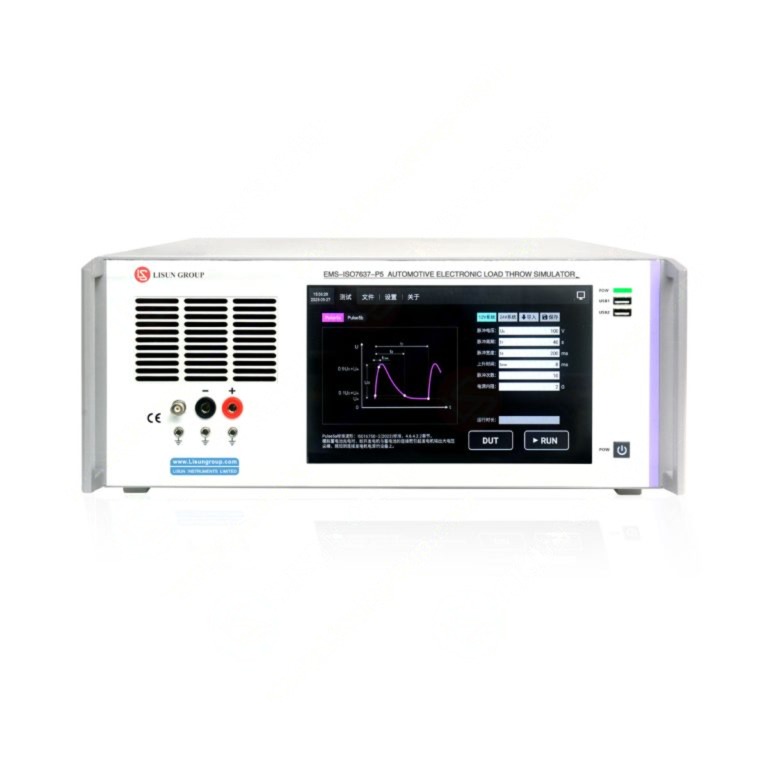
Automotive Transient GeneratorEMS-ISO7637

Automotive Transient Generator

What it is: Generates the transients that switching loads, ignition and alternator load dump put on a vehicle supply: pulses 1, 2a, 3a/3b and 5a/5b, for 12V, 24V and 48V systems.

Use it for:

  • Vehicle electronic components
  • Truck, bus and 48V systems
Output±10–700V; load dump to 200V
Coupling80V/30A CDN (50A and 100A options)
StandardsISO 7637-2, ISO 7637-3

Full details →

ISO 16750-2 Electrical Test SystemLS-ISO16750

ISO 16750-2 Electrical Test System

What it is: A complete set for the ISO 16750-2 supply tests, built from the instruments below: supply variation, ripple, dips, starting profiles, reverse voltage, load dump, ground offset, interruptions and open/short circuits.

Use it for:

  • Full ISO 16750-2, VW 80000 and LV 124 test programs
  • OEM supply qualification
CoversISO 16750-2 clauses 4.2 to 4.10
Built fromLIS-APS, EMS-ISO7637, LIS-OFFSET-D, PFS, LIS-LSCS
StandardsISO 16750-2, VW 80000, LV 124, GM 3172

Full details →

Four-Quadrant Bipolar Power SupplyLIS-APS series

Four-Quadrant Bipolar Power Supply

What it is: A fast bipolar supply that plays back the voltage profiles the ISO 16750-2 and OEM tests call for: over-voltage, ripple, slow rise and fall, drops and starting profiles.

Use it for:

  • ISO 16750-2 supply tests
  • OEM profiles to VW 80000 and LV 124
Output±40V or ±80V; ±10–100A
BandwidthDC–300kHz
StandardsISO 16750-2, ISO 7637-2

Full details →

Power Fail SimulatorPFS series

Power Fail Simulator

What it is: Cuts the supply for microseconds to milliseconds to check the component handles discontinuities in the vehicle supply.

Use it for:

  • ISO 16750-2 clause 4.9 and OEM interruption tests
Output±80V; 50–300A
InterruptionsFrom 1µs
StandardsISO 16750-2 Cl. 4.9

Full details →

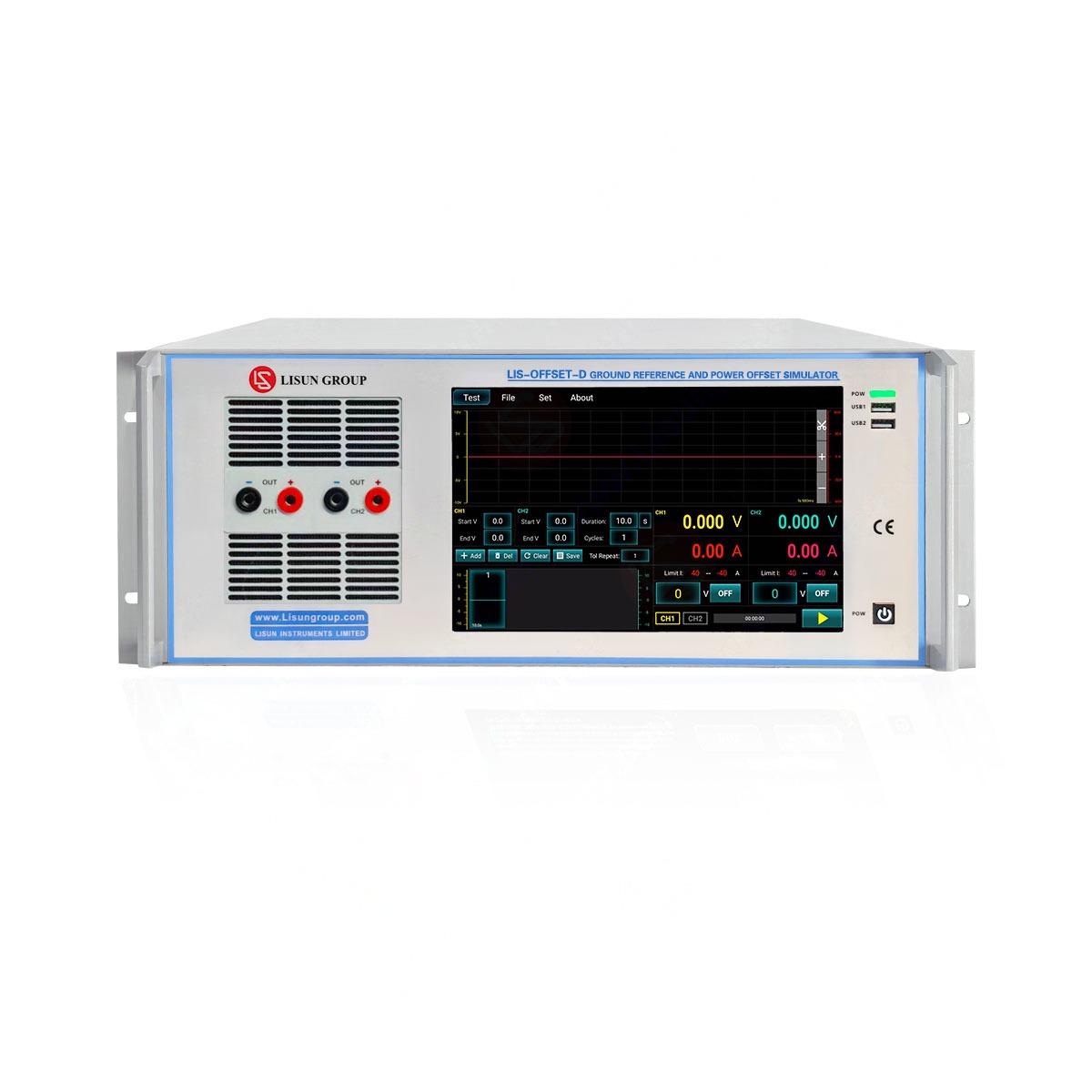
Ground Reference and Supply Offset SimulatorLIS-OFFSET-D series

Ground Reference and Supply Offset Simulator

What it is: Shifts the ground and supply reference of a component, as happens when current flows in a vehicle's chassis and ground wiring.

Use it for:

  • ISO 16750-2 clause 4.8 ground offset tests
Output0–±5V; 10–200A
BandwidthDC–100kHz
StandardsISO 16750-2 Cl. 4.8

Full details →

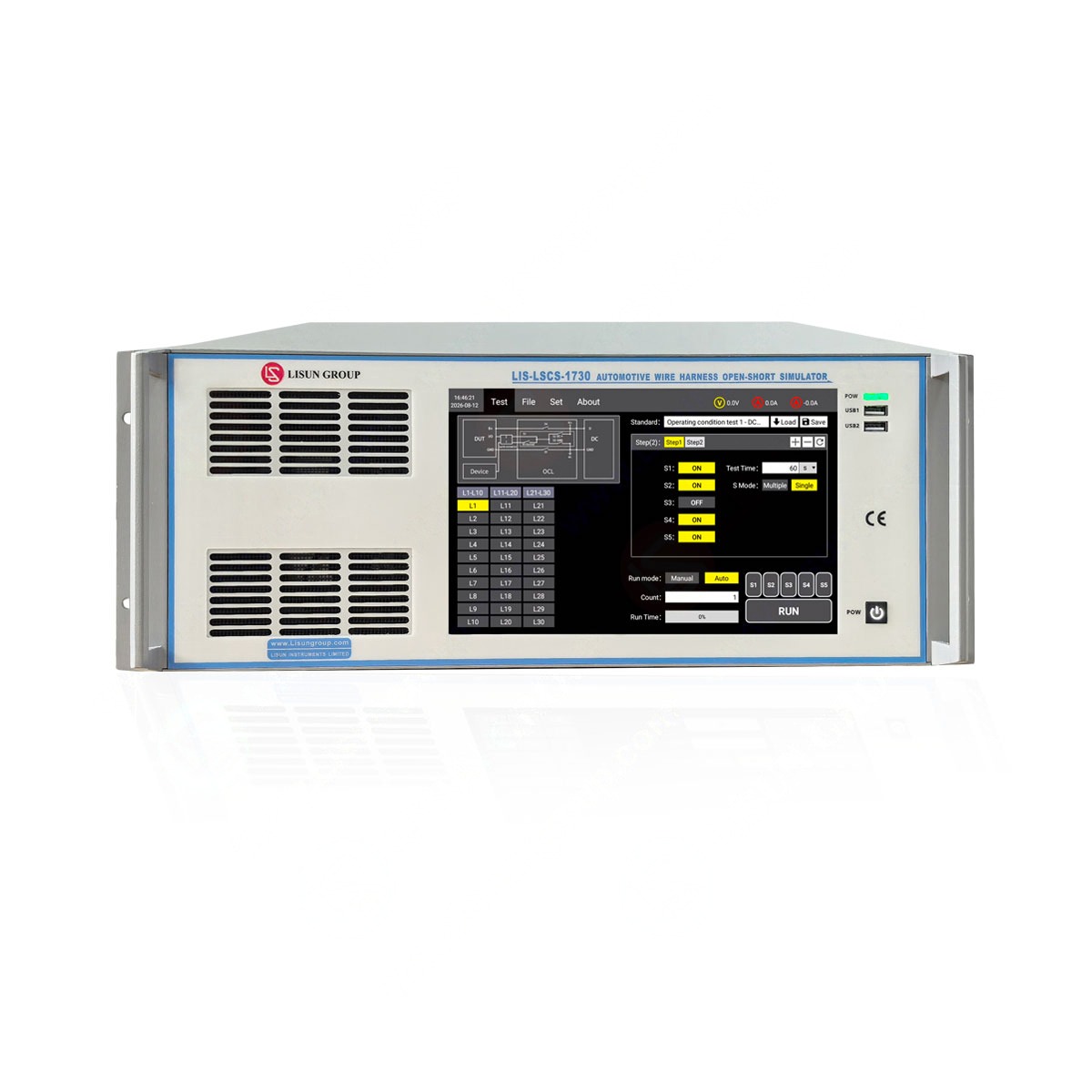
Wire Harness Open/Short SimulatorLIS-LSCS-1730 / 1750

Wire Harness Open/Short Simulator

What it is: Opens and shorts individual harness lines on a programmed schedule to check the component survives and recovers from wiring faults.

Use it for:

  • ISO 16750-2 clause 4.10 open and short circuit tests
Channels30 or 50
Rating10A per channel
StandardsISO 16750-2 Cl. 4.10

Full details →

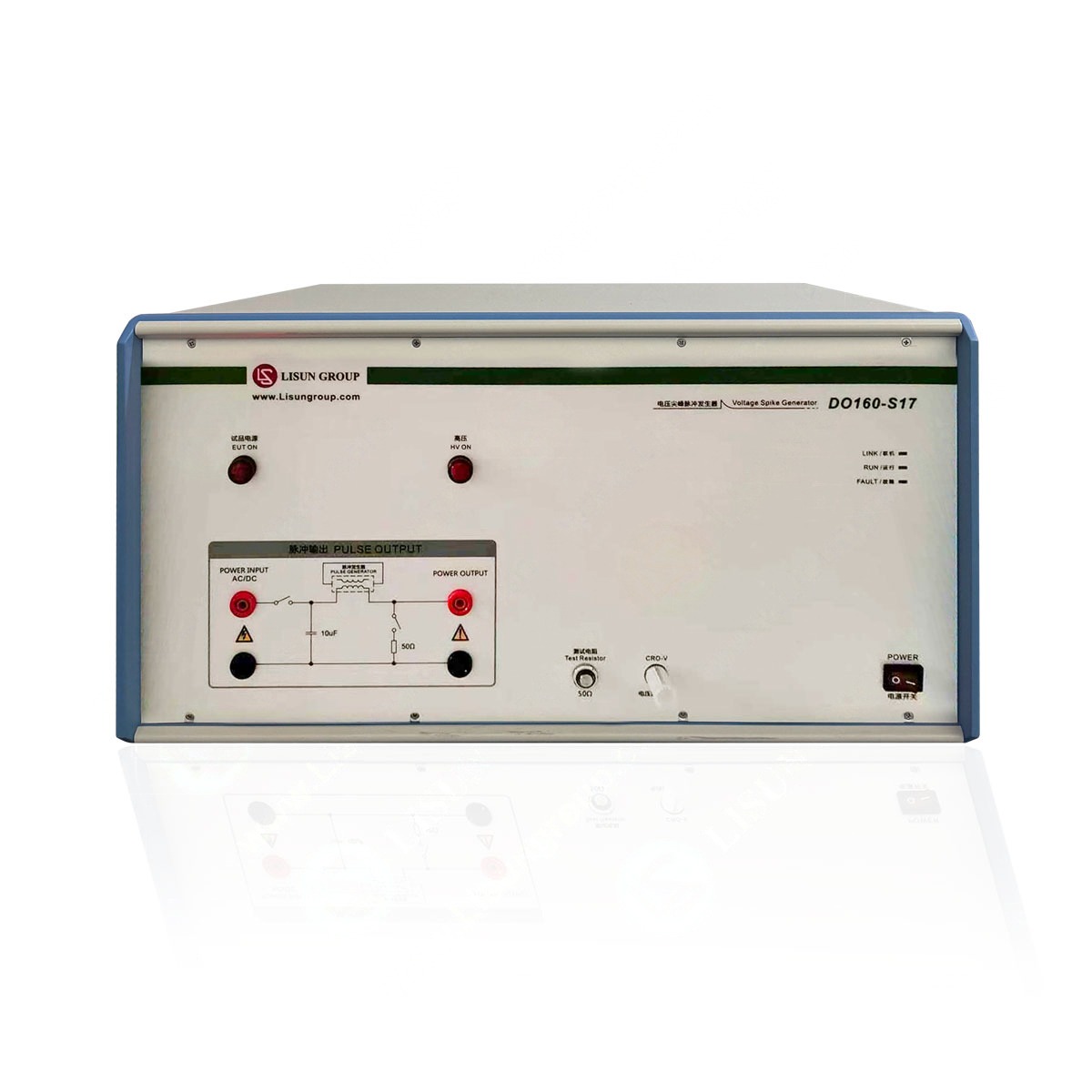
Avionics Voltage Spike GeneratorDO160-S17 series

Avionics Voltage Spike Generator

What it is: Applies the 10µs voltage spikes that DO-160 Section 17 specifies on aircraft AC and DC power leads.

Use it for:

  • Airborne equipment to DO-160 Section 17
Output5–1000V, 10µs, 50Ω
Lines16A, 50A or 100A
StandardsRTCA DO-160 Section 17

Full details →

LISNs and CDNs in Immunity Testing

A LISN (also called an artificial network) and a CDN both sit in the supply to the product, but they do different jobs, and which one a test uses depends on the standard.

Commercial IEC 61000-4-x testsUse coupling/decoupling networks. IEC 61000-4-6 conducted RF uses 150Ω CDNs, with EM or current clamps where a CDN does not fit. Surge and EFT/burst use their own CDNs, built into most LISUN generators, with heavy decoupling that a CISPR 50µH LISN is not designed for.
Automotive (ISO 11452, ISO 7637)Use a 5µH artificial network on the supply to set a defined impedance while the disturbance is injected by a BCI probe or transient generator. The LSBCI-40 system is used with the LIS-AN50A 5µH network.
Military and aerospace (MIL-STD-461, DO-160)Use LISNs on each power lead during conducted susceptibility tests such as CS101, CS114 and CS116, with the disturbance injected by probe or transformer.

Our CISPR 16-1-2 AC LISNs and the 1500V DC LISN for PV inverters are on the conducted emissions page. Tell us which standard you are testing to and we will confirm the network it needs.

Building a Test Bench

A typical commercial immunity bench starts with a surge generator, an EFT/burst generator, a dips generator and a conducted RF system, all on a bonded ground plane. Products with power-line communication, or installed in substations and industrial plants, add the low-frequency and oscillatory tests. Vehicle electronics need the ISO 7637, ISO 16750 and BCI equipment instead. Tell us your product standard and we will list the tests and generators it calls for. Read more: surge testing to IEC 61000-4-5, conducted RF immunity to IEC 61000-4-6 and why test benches need line isolation.

Related EMC Test Types
Radiated Immunity Test Systems
Testing how a product copes with strong radio fields
Radiated Emissions Test Systems
Testing what your product radiates, not just its susceptibility
Conducted Emissions Test Systems
Testing noise your product puts back onto its own power lines
ESD Simulators
ESD Simulators
Electrostatic discharge immunity testing
Send an Enquiry →Send an Enquiry →

Related Reading

Understanding the Test Setup

Conducted immunity tests share the same basic bench: the product sits on a bonded reference ground plane, powered through a coupling/decoupling network, with the generator injecting the disturbance and the product monitored for faults.