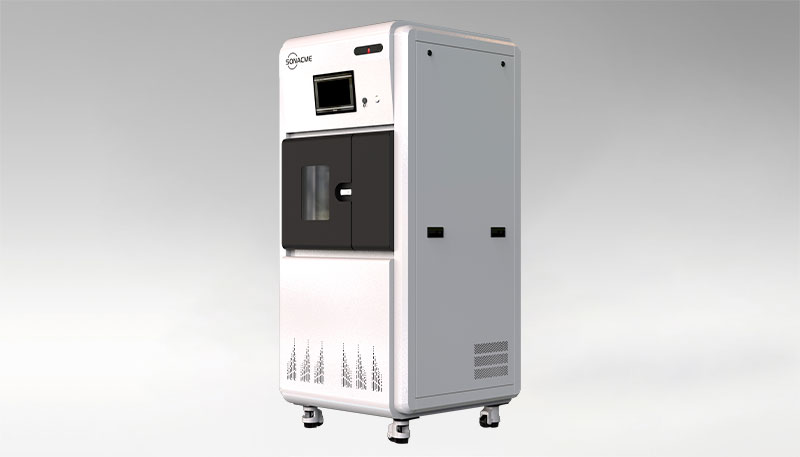
UV & Xenon Accelerated Aging Chambers
Full-Spectrum Weathering Simulation to ISO 4892, ISO 16474, and ISO 105-B02
Sunlight degrades materials in ways that are slow to observe outdoors but straightforward to accelerate under controlled lab conditions — UV exposure breaks down polymer chains, fades pigments, and embrittles coatings over months or years of real-world exposure. Xenon arc and UV lamp weathering chambers compress that timeline into weeks by reproducing the damaging portion of sunlight at controlled, repeatable intensity, often combined with a water spray cycle to simulate the additional stress of rain.
The two lamp types aren't interchangeable for every application. Xenon arc, filtered through the correct lens set, reproduces the full solar spectrum — UV, visible, and infrared — making it the closer match to actual outdoor exposure and the method called for by full-spectrum weathering standards. UV lamp systems isolate just the ultraviolet band, which is usually the dominant cause of polymer and coating degradation, giving a faster and lower-cost screening method where a standard specifically permits UV-only testing.
This range covers both bench-top and walk-in formats, and is built to the specific standards manufacturers are actually asked to test against: ISO 4892-3 for plastics, ISO 16474-2 for paints and coatings, ISO 105-B02 for textile colour fastness, and IEC 61215 for photovoltaic module weathering qualification. Matching the chamber and lamp type to the applicable standard matters more than raw chamber size — a walk-in format suits larger assemblies or higher sample throughput, while bench-top units suit smaller coupon and material testing.
The water spray system available on these chambers adds a further layer of realism for materials that see both sun and rain in service — exterior coatings, automotive components, and building materials in particular, where thermal shock from a sudden temperature drop during a rain cycle is itself part of the degradation mechanism being tested for.