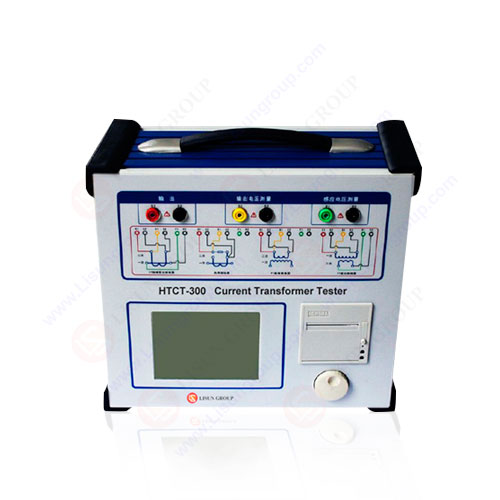
Current Transformer Tester
Ratio accuracy and polarity verification for current transformers.
A current transformer's accuracy and correct polarity are both critical to the metering or protection system it feeds — a CT with drifted ratio accuracy introduces billing or measurement error, while incorrect polarity can cause a protection relay to misoperate or fail to trip when it should. LISUN's HTCT-300 Series verifies both of these critical parameters directly: ratio accuracy and polarity for current transformers used in metering and protection applications.
Ratio accuracy testing confirms the CT actually transforms current at its specified ratio within the required tolerance, essential for metering applications where billing accuracy depends directly on CT ratio accuracy, and equally important for protection CTs where an inaccurate ratio can cause a protection scheme to under- or over-respond to an actual fault condition. Polarity verification confirms the CT's directional sense is correctly identified and connected — a polarity error in a protection scheme can cause incorrect relay operation, a serious concern in power system protection where correct operation during an actual fault is safety-critical.
Testing both parameters together addresses the two most operationally significant CT characteristics in one instrument, relevant whether verifying new CTs before installation, checking CTs during commissioning, or periodically verifying in-service CTs as part of a protection system maintenance programme.
Frequently Asked Questions
Why does CT polarity matter so much for protection applications?
Protection relays depend on correctly-oriented current signals to determine fault direction and magnitude accurately. A CT connected or wired with reversed polarity can cause a protection scheme to misidentify fault direction, potentially failing to trip when it should or tripping incorrectly — a safety-critical error in a power system protection context.
Why does ratio accuracy matter differently for metering versus protection CTs?
For metering CTs, ratio accuracy directly determines billing accuracy — an inaccurate ratio means incorrect energy measurement. For protection CTs, ratio accuracy affects whether the protection scheme correctly identifies fault magnitude, which determines whether protective devices operate at the right threshold during an actual fault condition.
When should current transformers be tested — only at installation, or periodically?
Both matter: verifying new CTs before installation and during commissioning catches manufacturing or wiring errors early, while periodic in-service testing as part of a maintenance programme catches degradation or connection issues that can develop over a CT's operational life.