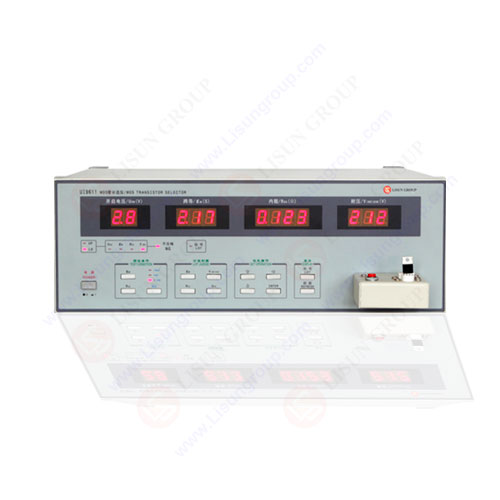
MOS/Transistor Selector Series
Automatic binning by measured electrical parameters.
A MOSFET or transistor datasheet gives a specified range for parameters like threshold voltage or on-resistance, but individual devices within that range can behave differently enough to matter in a sensitive application — matching a pair of devices for a differential circuit, or selecting devices that fall within a tighter tolerance than the datasheet guarantees. LISUN's UI9611/UI9600A Series addresses this directly: automatic binning of MOSFETs and transistors by their actual measured electrical parameters, not just the datasheet's nominal range.
By measuring each device individually and sorting it into a bin based on its actual performance, this range lets a production or R&D process work with devices grouped by genuine measured characteristics rather than trusting that every device from a given batch falls neatly and uniformly within the manufacturer's published range. This matters particularly for applications sensitive to device-to-device variation — precision analog circuits, matched-pair applications, or any design where consistent electrical behaviour across many units affects the finished product's performance.
Automated binning also speeds up what would otherwise be a slow, manual sorting process — testing devices one at a time by hand doesn't scale to production volumes, and an automated selector makes measured-parameter sorting practical at the throughput a production line actually needs.
Frequently Asked Questions
Why would I sort devices by measured parameters instead of trusting the datasheet range?
A datasheet range represents the guaranteed worst-case bounds across an entire production run, but individual devices can vary meaningfully within that range. For applications sensitive to this variation — matched pairs, precision circuits — sorting by actual measured parameters gives tighter, more predictable device selection than relying on the datasheet range alone.
What kind of applications benefit most from binned MOSFETs or transistors?
Differential and matched-pair circuits, precision analog applications, and any production process where consistent device-to-device electrical behaviour affects the finished product's performance benefit from working with devices sorted by actual measured characteristics rather than unsorted stock.
How does automated binning compare to manual device selection?
Manual selection — testing devices individually and sorting by hand — doesn't scale to production volumes and introduces its own measurement inconsistency between operators or sessions. An automated selector tests and sorts at production throughput with consistent measurement methodology across every device.