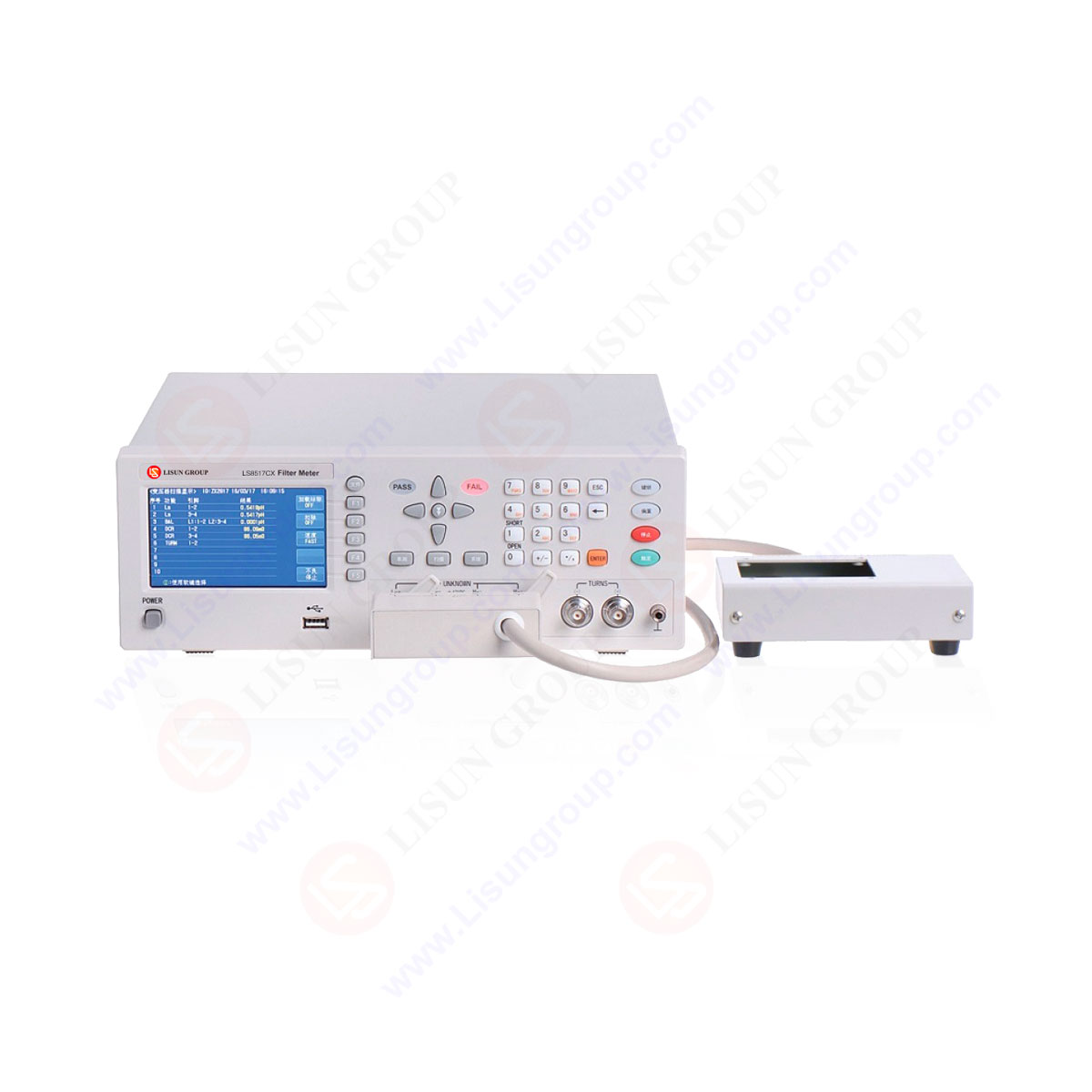
Common-Mode Inductor Balance Tester
Winding balance and common-mode performance testing for chokes and inductors.
A common-mode choke's EMI suppression performance depends on its two windings being genuinely balanced — if the windings aren't well matched, the choke's common-mode rejection suffers, undermining the very EMI filtering function it's designed to provide. LISUN's LS8517CX Series tests exactly this: winding balance and common-mode performance for chokes and inductors used in EMI filter applications.
Winding balance testing verifies the two windings of a common-mode choke are matched closely enough to provide effective common-mode rejection, while common-mode performance testing more directly characterises how well the component actually suppresses common-mode noise — the specific function these EMI filter components exist to perform. Testing both together gives a complete picture of whether a given common-mode inductor will actually deliver the EMI suppression performance its design intends.
This matters for EMI filter component manufacturing and incoming inspection specifically, because a common-mode choke with imbalanced windings can pass a basic inductance check while still underperforming on the common-mode rejection that's its actual functional purpose — a gap that only dedicated balance and common-mode testing reveals.
Frequently Asked Questions
Why does winding balance matter specifically for common-mode chokes?
A common-mode choke relies on its two windings being closely matched so that differential-mode signals largely cancel while common-mode signals are rejected together — if the windings are imbalanced, this cancellation and rejection behaviour degrades, reducing the choke's effectiveness at suppressing common-mode EMI noise even if its basic inductance measures correctly.
How can a common-mode choke pass a basic inductance test but still underperform in service?
A basic inductance measurement typically characterises the choke's overall inductance value, not the balance between its two windings specifically. A choke can measure the correct total inductance while having a winding imbalance that degrades its actual common-mode rejection performance — the functional characteristic that matters for EMI filtering.
What applications rely on well-matched common-mode chokes?
EMI filter circuits generally, wherever common-mode noise suppression on power or signal lines is required — power supply input filtering, motor drive EMI suppression, and other applications where common-mode conducted emissions need to be controlled to meet EMC compliance requirements.