EMC Test Chambers Explained
An EMC test chamber is a shielded room that keeps outside radio signals out and the product's own emissions in, so radiated emissions and immunity can be measured repeatably. Inside, RF absorber controls reflections so the room behaves like an open test site. The chamber you need depends on the standards you test to, the size of the products, and the frequency range. Finch supplies RF Technology semi-anechoic, MIL-STD, CISPR 25 automotive and reverberation chambers, LISUN GTEM cells, shielded boxes and the full set of chamber accessories across Australia and New Zealand.
Semi-Anechoic, Full Anechoic or Reverberation Chamber?
| Chamber type | How it works | Used for |
|---|
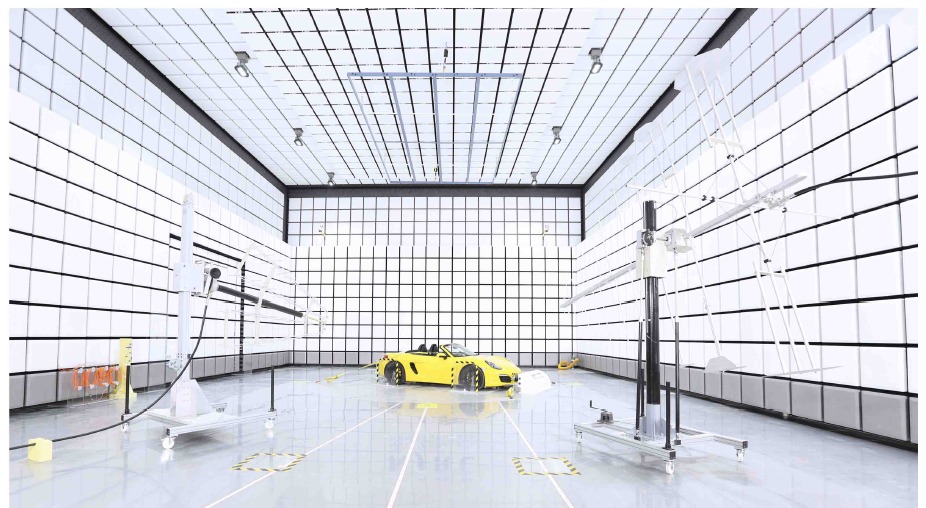
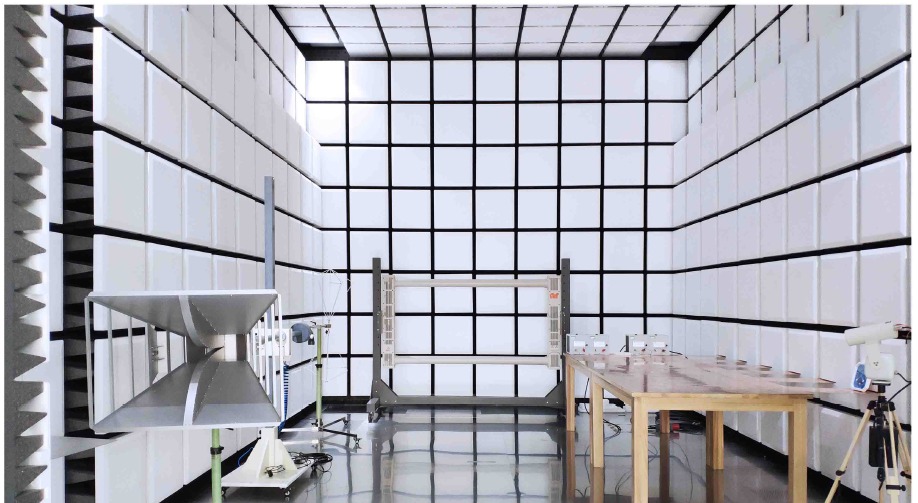
| Semi-anechoic chamber (SAC) | Absorber on walls and ceiling, conducting ground-plane floor, like an open-area test site indoors | CISPR 16-1-4 radiated emissions, IEC 61000-4-3 immunity, MIL-STD-461, CISPR 25 |
| Full anechoic chamber (FAR) | Absorber on all six surfaces, no ground plane: true free space | Antenna patterns, 5G and mmWave OTA, radar and satellite work. Not for CISPR 16 emissions |
| Reverberation chamber | Reflective metal walls with a rotating stirrer for a statistically uniform field | IEC 61000-4-21, DO-160 Section 20, MIL-STD-461 RS103 above the lower usable frequency |
| GTEM cell | Tapered transmission line that creates a uniform field over a small test volume | Compact emissions and immunity testing of small products and pre-compliance |
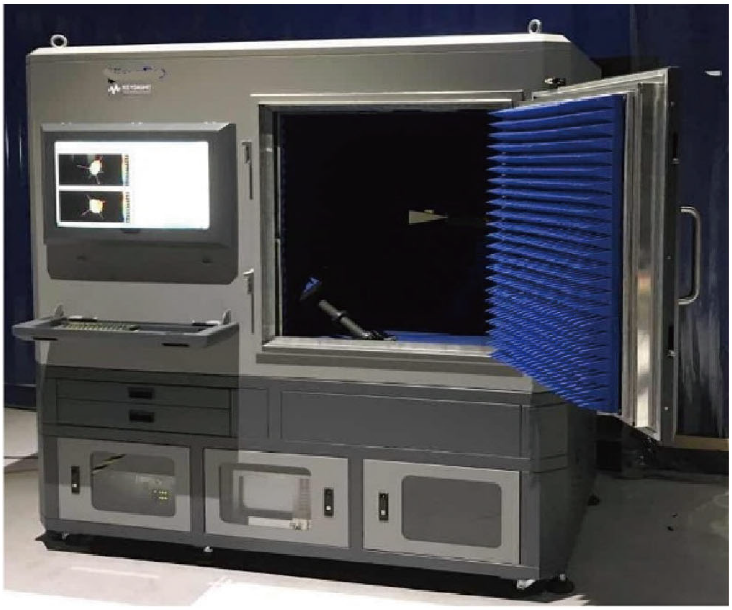
| Shielded box | Small RF-tight enclosure | Isolating wireless devices and modules for RF and production testing |
Many organisations end up with more than one type. Our comparison of semi-anechoic, full anechoic and reverberation chambers goes into each in detail.
3 m, 5 m or 10 m Semi-Anechoic Chamber
Measurement distance is the first decision for a semi-anechoic chamber. It sets the room size, the standards you can run and the cost.
| 3 m SAC | 5 m SAC | 10 m SAC |
|---|
| Typical quiet zone | 1.5–3.0 m | 2.0–4.0 m | 3.0–8.0 m |
| Approx. internal floor area | 40–70 m² | 80–130 m² | 240–400 m² |
| Full-vehicle testing (CISPR 12, UN ECE R10) | No | No | Yes |
| Relative capital cost | Reference | 1.5–2× | 4–8× |
A 3 m chamber covers most commercial product work (CISPR 32, CISPR 14, CISPR 15, CISPR 11) and component-level CISPR 25, MIL-STD-461 and DO-160 Section 20. Specify a quiet zone 30–50% larger than your largest product today. See choosing 3 m, 5 m or 10 m and compare the standard sizes on our semi-anechoic chambers page.
Chambers for Military, Aerospace and Automotive EMC
- MIL-STD-461: a shielded enclosure with absorber and a bonded ground-plane bench, the antenna 1 m from the bench edge. See the RF Technology MIL-STD chamber and our guide to MIL-STD-461 test methods.
- RTCA/DO-160 and MIL-STD-461 RS103: a reverberation chamber reaches high field strengths with much less amplifier power above its lowest usable frequency. See reverberation chambers for DO-160 and MIL-STD-461.
- CISPR 25 and ISO 11452: component tests use an absorber-lined enclosure with a ground-plane bench and a 1 m antenna distance. Whole vehicles are tested in a 10 m chamber to CISPR 12, UN ECE Regulation 10 and ISO 11451-2. See the CISPR 25 automotive chamber and our CISPR 25 and ISO 11452 guide.
Absorber: Hybrid or Microwave
Absorber decides whether a chamber passes validation and keeps passing. Hybrid absorber, ferrite tiles under carbon-loaded foam pyramids, works from about 30 MHz to 18 GHz and is the standard choice for EMC chambers. Microwave absorber is foam only and works from about 1 GHz up. RF Technology absorbers supplied by Finch carry a 25-year performance warranty. Read EMC absorbers explained or browse hybrid and microwave absorber.
Validation: NSA, Field Uniformity and Shielding
- Normalised site attenuation (NSA): for radiated emissions from 30 MHz to 1 GHz, CISPR 16-1-4 requires results within ±4 dB of the theoretical value.
- Field uniformity: IEC 61000-4-3 radiated immunity needs a uniform field area, calibrated before testing.
- Site VSWR: checks the site above 1 GHz, normally with floor absorber between antenna and product.
- Shielding effectiveness: confirms the enclosure keeps outside signals out.
Revalidate every two to five years, or after damage or major changes. Read NSA, field uniformity and shielding effectiveness explained.
Planning an EMC Chamber Project in Australia and New Zealand
- List the standards and products: standards, frequency range, field strengths and the largest product you will test.
- Choose the chamber type and distance: SAC, reverberation, GTEM or a combination; 3 m, 5 m or 10 m.
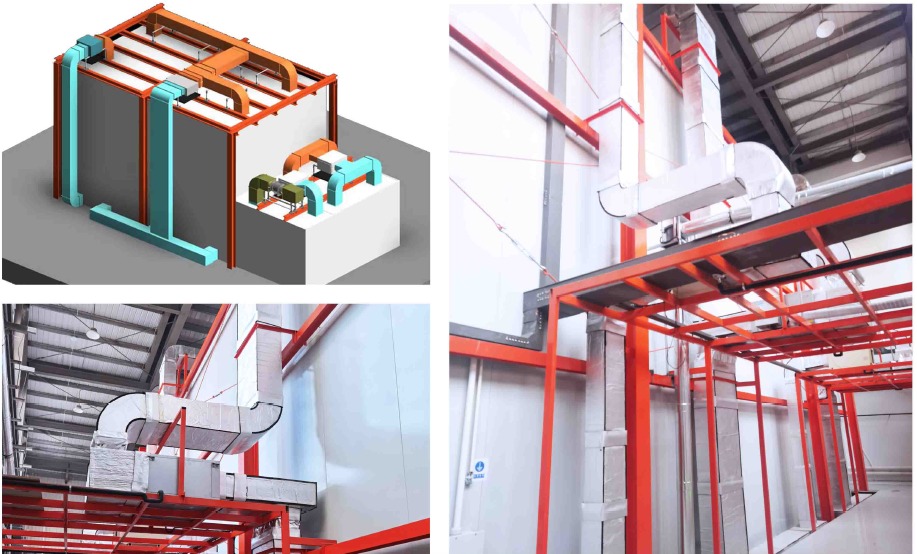
- Check the site: floor area, ceiling height, floor loading, power and HVAC.
- Specify the equipment that goes in it: turntable, antenna mast, filters, EMC antennas, RF power amplifiers and receivers.
- Plan validation and handover: NSA, field uniformity and shielding measurements at commissioning.
Planning a chamber? Send us your standards and product sizes and we'll work through chamber type, size and site requirements with you.
Frequently Asked Questions
What is an EMC chamber?
An EMC chamber is a shielded room, usually lined with RF absorber, used to measure the electromagnetic emissions of a product and its immunity to interference without outside signals or reflections affecting the result.
What is the difference between an anechoic and a semi-anechoic chamber?
A semi-anechoic chamber has absorber on the walls and ceiling and a conducting ground-plane floor, as most EMC emissions standards assume. A full anechoic chamber has absorber on all six surfaces for true free-space measurements such as antenna patterns.
What size EMC chamber do I need?
A 3 m semi-anechoic chamber covers most commercial and component-level testing. A 5 m chamber suits larger products, and a 10 m chamber is needed for full-vehicle testing to CISPR 12 and UN ECE Regulation 10, and for large equipment.
Can one chamber do emissions and immunity testing?
Yes. A semi-anechoic chamber is normally used for both CISPR 16-1-4 radiated emissions and IEC 61000-4-3 radiated immunity, once field uniformity has been calibrated.
How often should an EMC chamber be revalidated?
Every two to five years, or after damage or major changes, using NSA, field uniformity and shielding effectiveness measurements.
Do you supply EMC chambers in New Zealand?
Yes. Finch supplies EMC chambers, absorber refits and chamber accessories across Australia and New Zealand.