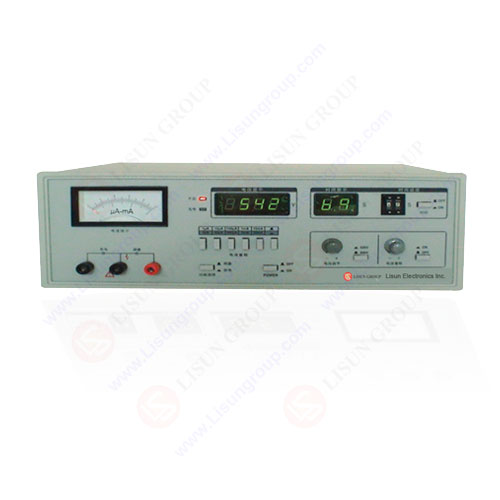
Electrolytic Capacitor Tester
Capacitance, ESR, and leakage testing for electrolytic capacitors.
An electrolytic capacitor's health depends on more than its capacitance value alone — ESR (equivalent series resistance) and leakage current both matter just as much, and a capacitor can measure correct capacitance while already showing degraded ESR or excessive leakage that predicts early failure. LISUN's HF2686C Series tests all three parameters together, giving a complete picture of electrolytic capacitor condition rather than a single, potentially misleading measurement.
Built for production-line use, the HF2686C measures capacitance, ESR, and leakage current on electrolytic capacitors as part of an incoming inspection or production QC workflow — catching capacitors that would pass a capacitance-only check but fail on ESR or leakage, both of which are common failure modes as electrolytic capacitors age or are manufactured with process defects. Testing all three parameters in one pass keeps the inspection process efficient rather than requiring separate instruments or separate test steps for each parameter.
This comprehensive testing approach matters because electrolytic capacitor failures in the field are often ESR or leakage-driven rather than capacitance-driven — a capacitor with elevated ESR can cause excessive heating and ripple in a power supply circuit well before its capacitance value drifts out of specification, making ESR and leakage screening a meaningful complement to capacitance verification alone.
Frequently Asked Questions
Why test ESR and leakage current, not just capacitance, for electrolytic capacitors?
Electrolytic capacitor degradation and manufacturing defects often show up first in ESR or leakage current rather than capacitance — a capacitor can measure correct capacitance while already having degraded ESR that will cause excess heating in service, or elevated leakage current indicating an early-stage defect. Testing all three catches failure modes that capacitance testing alone would miss.
What causes elevated ESR in an electrolytic capacitor?
Elevated ESR can result from electrolyte drying or degradation over time (a normal aging process, but one that accelerates under heat or age), or from manufacturing defects present from the start — either way, elevated ESR increases power dissipation and heating within the capacitor during operation, which can accelerate further degradation.
Is this tester suited to incoming inspection as well as production QC?
Yes — testing capacitance, ESR, and leakage together on incoming stock catches supplier quality issues before those capacitors are built into a finished product, in addition to its role verifying output quality during in-house production testing.