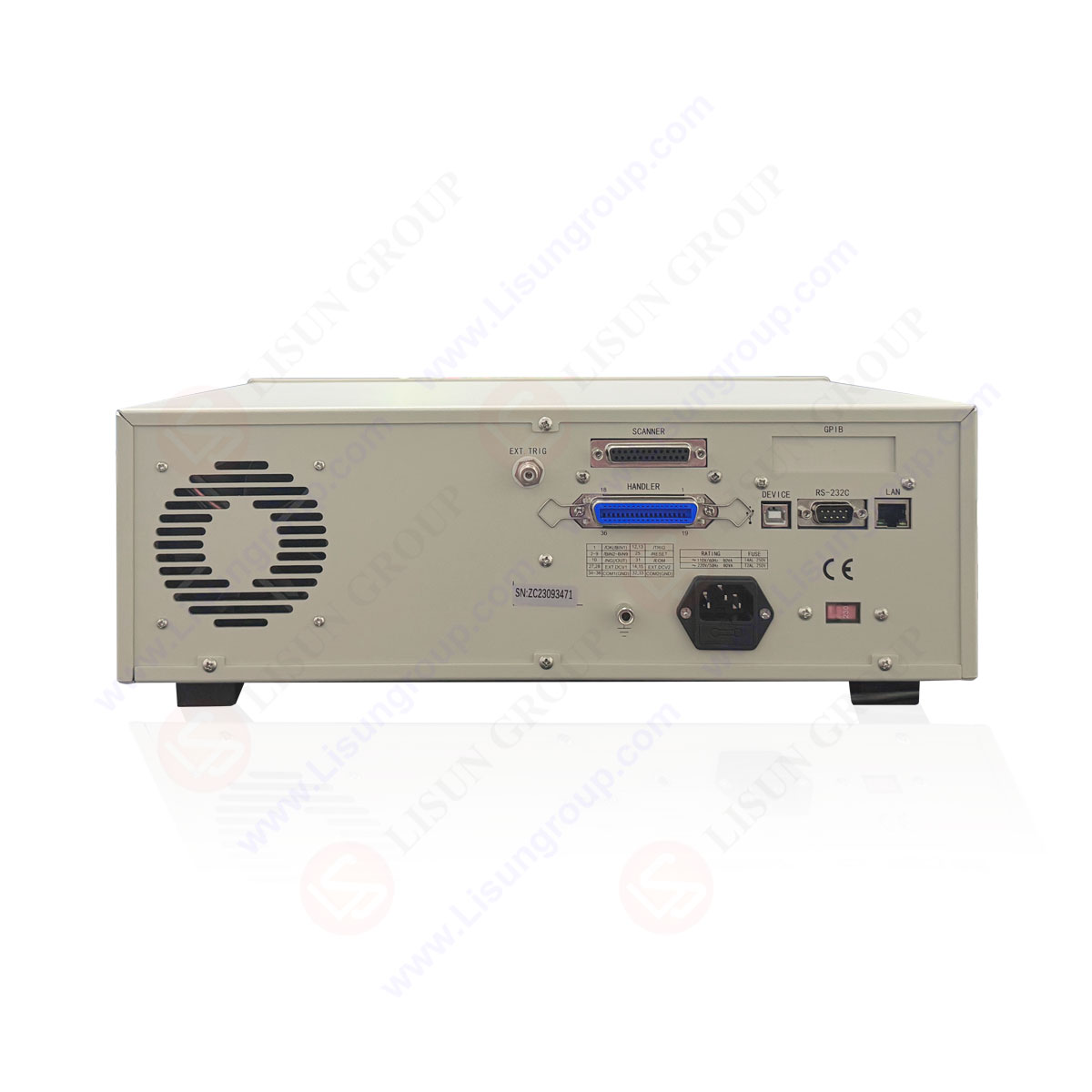
Transformer Comprehensive Tester
Turns ratio, winding resistance, insulation, and loss testing in one instrument.
Fully qualifying a transformer touches several distinct electrical characteristics — turns ratio, winding resistance, insulation resistance, and loss performance under both no-load and loaded conditions — and testing each with a separate dedicated instrument slows down what should be a routine qualification or production test sequence. LISUN's LS2789 Series consolidates all of these into one instrument: turns ratio, winding resistance, insulation resistance, and no-load/load loss testing together.
Turns ratio testing confirms the transformer's winding ratio matches its design specification, critical to correct voltage transformation. Winding resistance measurement catches manufacturing defects or degradation in the winding itself, while insulation resistance testing verifies the winding-to-core and winding-to-winding insulation is intact — a safety-critical parameter for any transformer. No-load loss (core loss under excitation with no load current) and load loss (winding-related loss under load current) together characterise the transformer's efficiency profile across its operating range.
Consolidating these tests into one instrument matters for production and R&D environments running a full transformer qualification sequence repeatedly — rather than moving a unit between separate turns-ratio, resistance, insulation, and loss test stations, one instrument covers the complete electrical qualification in a single connected test sequence.
Frequently Asked Questions
What's the difference between no-load loss and load loss in transformer testing?
No-load loss (also called core or iron loss) is measured with the transformer excited but carrying no load current, reflecting losses inherent to the core material and excitation. Load loss (also called copper loss) is measured under load current, reflecting resistive losses in the windings — together they characterise total transformer efficiency across different operating conditions.
Why does insulation resistance testing matter alongside the electrical performance tests?
Insulation resistance verifies the transformer's winding-to-core and winding-to-winding electrical isolation is intact, a safety-critical parameter independent of the transformer's ratio or loss performance — a transformer could pass every electrical performance test while having compromised insulation that poses a safety risk in service.
What's the benefit of testing all four parameters on one instrument rather than separate testers?
A single consolidated instrument avoids moving the transformer between multiple test stations, reduces total test time for a full qualification sequence, and ensures consistent test conditions and methodology across all four measurements — particularly valuable in a production environment running the same full test sequence on many units.