Home /
This is some text inside of a div block.
Lighting & Photometric Test Instruments

Photometric Measurement Systems

Complete Photometric Characterisation from Goniophotometry to Spectroradiometry

Fully characterising how a light source performs means measuring several distinct things: the spectral power distribution and colour properties, the total luminous flux it emits, and how that light intensity distributes across different angles — three related but genuinely separate measurements, each requiring its own instrument geometry. LISUN's LSG / LMS / IS Series covers the complete measurement chain: goniophotometers and goniospectroradiometers for intensity distribution, integrating spheres from tabletop to 3-metre diameter for total flux, and CCD spectroradiometers for spectral and colorimetric measurement.

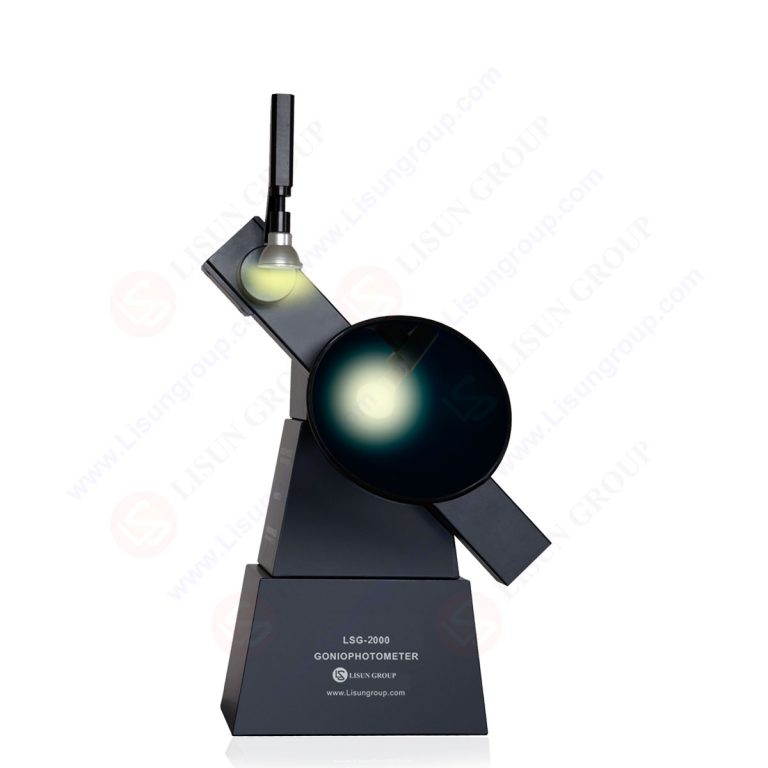
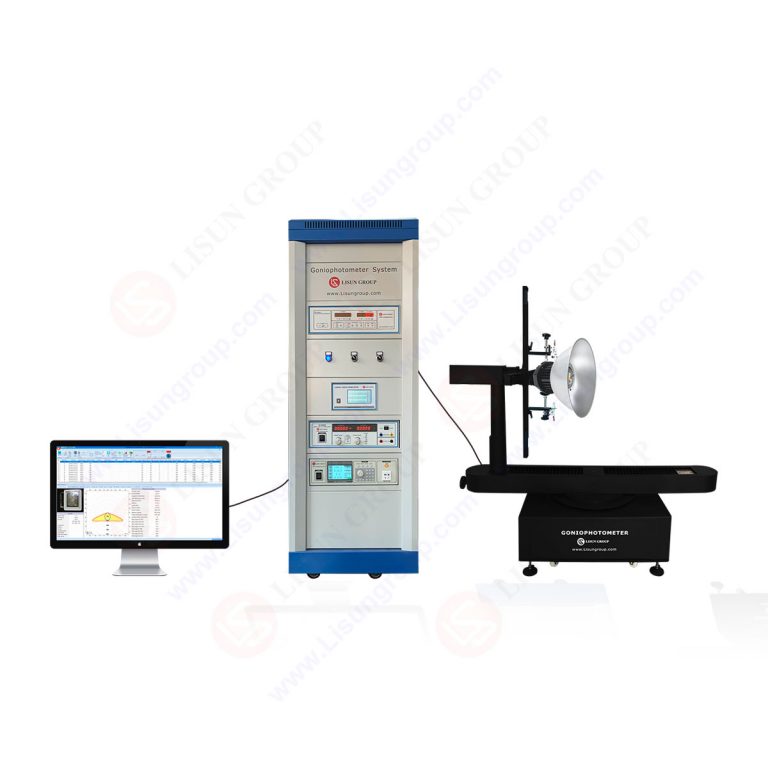
Goniophotometers measure how luminous intensity varies with angle around a light source or luminaire, essential for luminaire design and for standards like IES LM-79 and EN13032-1 that require full intensity distribution data, not just a single total-output number. The range spans from CIE Class A precision instruments with angle accuracy down to 0.01° — suited to accredited laboratory work — through to more compact rotating-mirror and combined-format models for general LM-79/EN13032-1 testing where the highest angular precision isn't the deciding requirement.

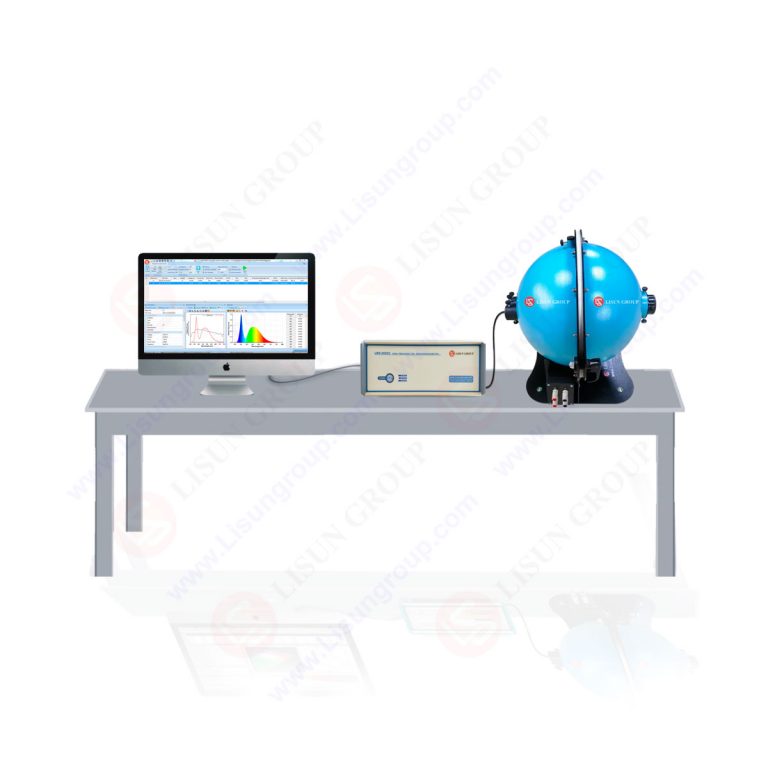
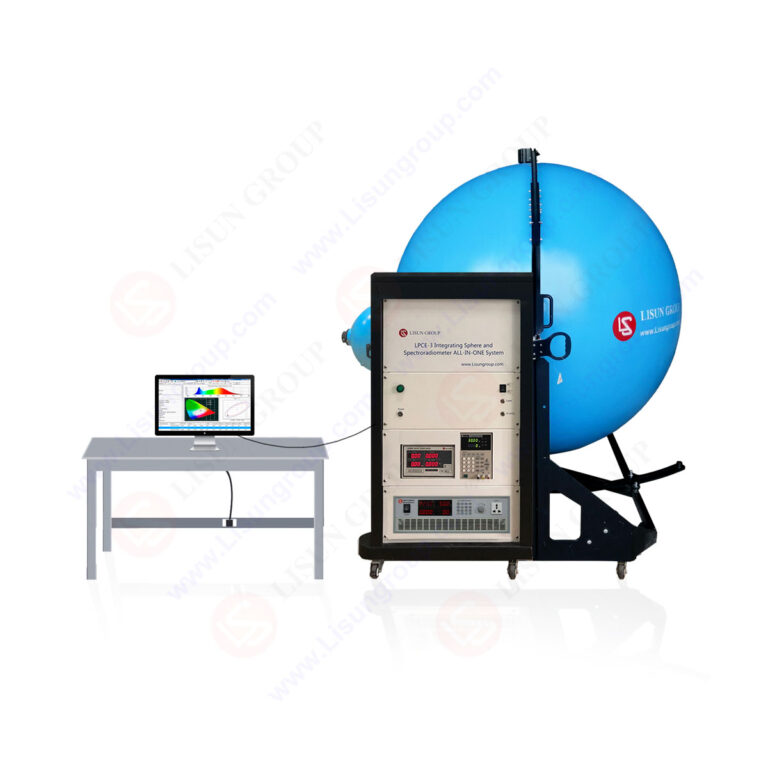
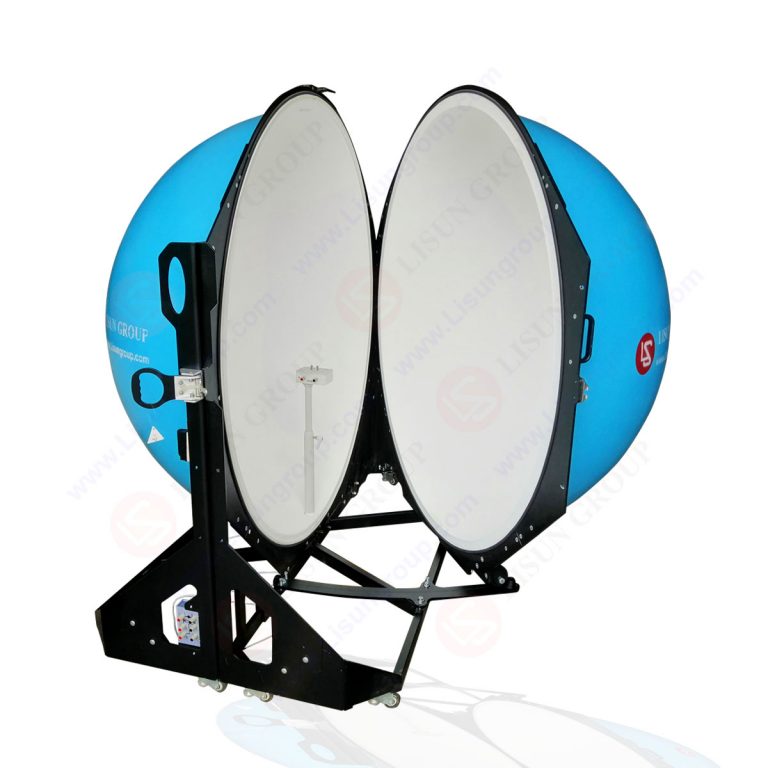
Integrating spheres measure total luminous flux by capturing essentially all the light a source emits, with sphere diameter scaling to match the source being measured — larger sources and higher flux outputs generally call for larger spheres to maintain measurement accuracy. CCD spectroradiometers, meanwhile, measure the spectral power distribution itself, the basis for colour rendering index, correlated colour temperature, and other colorimetric parameters buyers and specifiers increasingly require documented. Complete LM-79 compliant integrating sphere spectroradiometer systems combine sphere and spectroradiometer into a single turnkey solution, appropriate where a lab needs full LED and luminaire photometric testing capability without assembling and validating the individual components separately.

Frequently Asked Questions

Why do intensity distribution, total flux, and spectral measurement each need a different instrument?

Each measurement captures a fundamentally different aspect of a light source's output: a goniophotometer maps how intensity varies by angle (important for luminaire beam design and glare), an integrating sphere sums total emitted flux regardless of direction (the basis for efficacy and lumen output specifications), and a spectroradiometer measures the wavelength-by-wavelength spectral content (the basis for colour metrics). No single instrument geometry can capture all three accurately.

What determines whether a smaller or larger integrating sphere is needed for a given measurement?

Sphere size affects both the physical light source size that fits inside without excessive self-absorption error and the accuracy achievable at a given flux level — a source that's large relative to the sphere, or a source that occupies too much of the sphere's internal surface area, introduces measurement error. Matching sphere diameter to the source's physical size and expected flux output keeps measurement accuracy within specification.

What does a complete LM-79 compliant system add over assembling individual instruments separately?

A complete system combines a validated integrating sphere and spectroradiometer configuration already characterised and calibrated together as a unit, reducing the setup, calibration, and validation work a lab would otherwise need to do when combining individually sourced components — relevant for a lab standing up new LED and luminaire photometric testing capability from scratch.
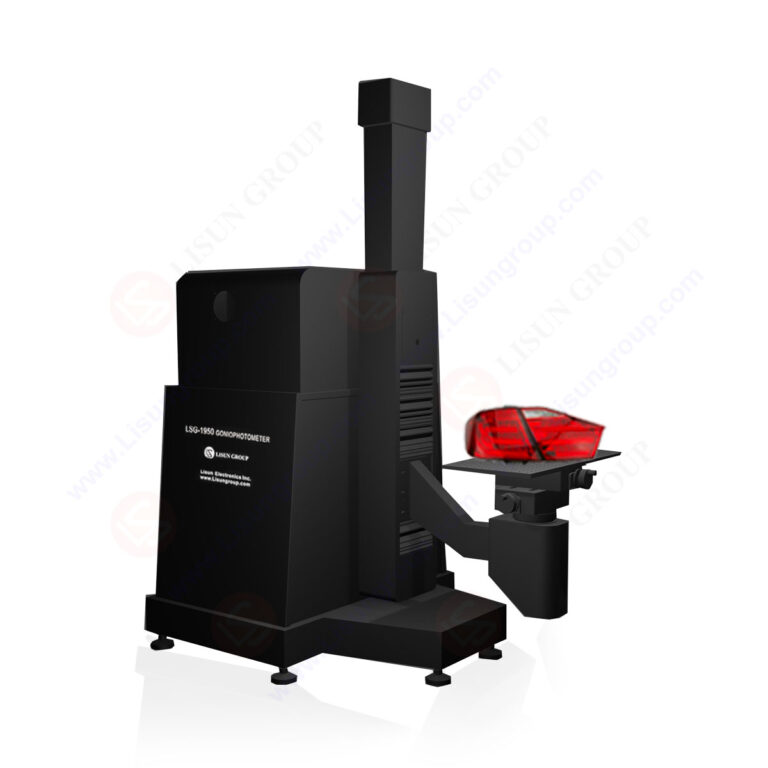
LISUN LSG-1950 Goniophotometer — Photometric Measurement Systems
Inquire About This Range →
LSG-1950 Goniophotometer for Automotive and Signal Lamps
Goniophotometers — High Precision
Highest angular accuracy and CIE Class A instruments for accredited photometric labs.
View Product Details →
ModelKey Specification 
LSG-1950Angle accuracy 0.01°, CIE Class AView
LSG-1950SAngle accuracy 0.1°, CIE Class AView
LSG-6000Angle accuracy 0.05°, CIE/IES/LDT exportView
LSG-1890BAngle accuracy 0.1°, 60kg max luminaireView
LSG-1890BCCD High Precision Rotation Luminaire Goniospectroradiometer
Goniophotometers — Combined Spectroradiometer
Integrated goniophotometer plus spectroradiometer for combined intensity distribution and colour measurement.
View Product Details →
ModelKey Specification 
LSG-1890BCCDAngle accuracy 0.1°, chromaticity ±0.0015View
LSG-1800AAngle accuracy 0.2°, CIE Class AEnquire
LSG-1800ACCDAngle accuracy 0.2°, chromaticity ±0.0015View
LSG-1900BNear field moving detector, mirror type CView
LSG-2000 Goniophotometer with Rotating Mirror
Goniophotometers — Compact & Combined
Rotating mirror and combined-format goniophotometers for general LM-79/EN13032-1 testing.
View Product Details →
ModelKey Specification 
LSG-2000Rotating mirror, IES LM-79/EN13032-1View
LSG-1700C-γ and B-β geometry, multi-format exportView
LSG-1700CCDCombined goniophotometer + CCD spectroradiometerView
LSG-1200ATest range 0.1–30,000cd, Class AView
LMS-9500C Scientific Grade CCD Spectroradiometer
CCD Spectroradiometers — High Precision
Laboratory-grade spectroradiometers for precise wavelength and colorimetric measurement.
View Product Details →
ModelKey Specification 
LMS-9500CWavelength accuracy ±0.2nm, TE-cooled CCDView
LMS-9000CWavelength accuracy ±0.3nmView
LMS-7000Wavelength accuracy ±0.5nm, multiple rangesView
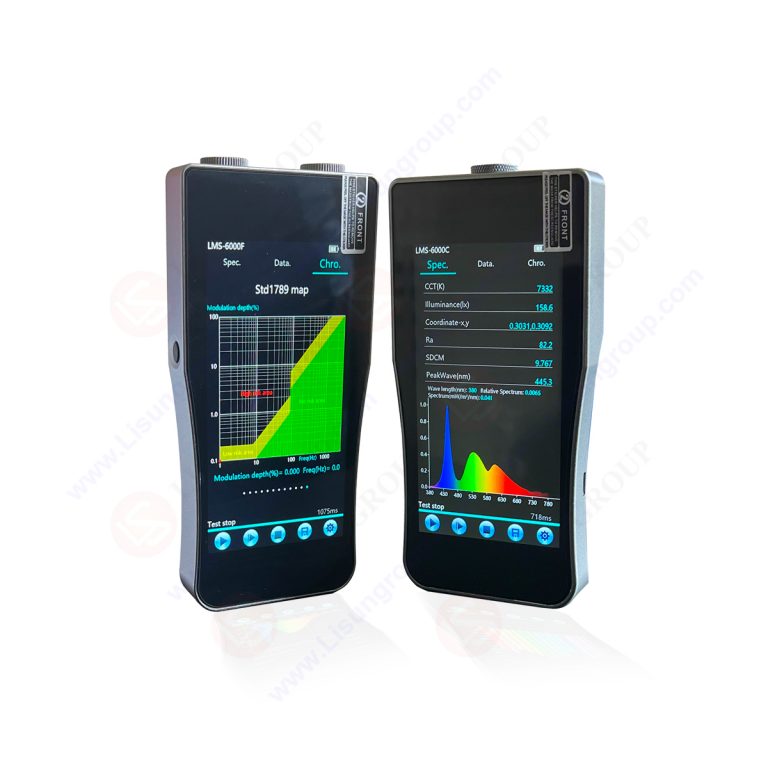
LMS-6000 Portable CCD Spectroradiometer
CCD Spectroradiometers — Portable
Field-portable spectroradiometer and spectral radiance colorimeter.
View Product Details →
ModelKey Specification 
LMS-60005-inch touch screen, 20hr batteryView
Spectral Radiance ColorimeterSpectral radiance and colorimetric parametersView
LPCE-3 CCD Spectroradiometer Integrating Sphere Compact System
LED Integrating Sphere Spectroradiometer Systems
Complete turnkey LED photometric test systems combining integrating sphere and spectroradiometer.
View Product Details →
ModelKey Specification 
LPCE-3Complete LM-79/LM-80 test systemView
LPCE-2Complete CIE127/LM-79 test systemView
LPCE-2(LMS-9000CUV)200–400nm UV variantView
IS-*MA Integrating Sphere With Holder Base
Integrating Spheres
Bare integrating spheres in a range of sizes for total luminous flux measurement.
View Product Details →
ModelKey Specification 
IS-*MAØ0.3–3.0m, flux 0.001–1,999,900lmView
IS-*MA**P / IS-*MA**CØ1.5–3.0m, built-in lamp jigsView
IS-*MTØ0.3–2.0m, constant temperature controlView
Ulbricht Integrating Spheres (Bare Series)Ø0.3–4.0m, uncoated, custom instrumentationView
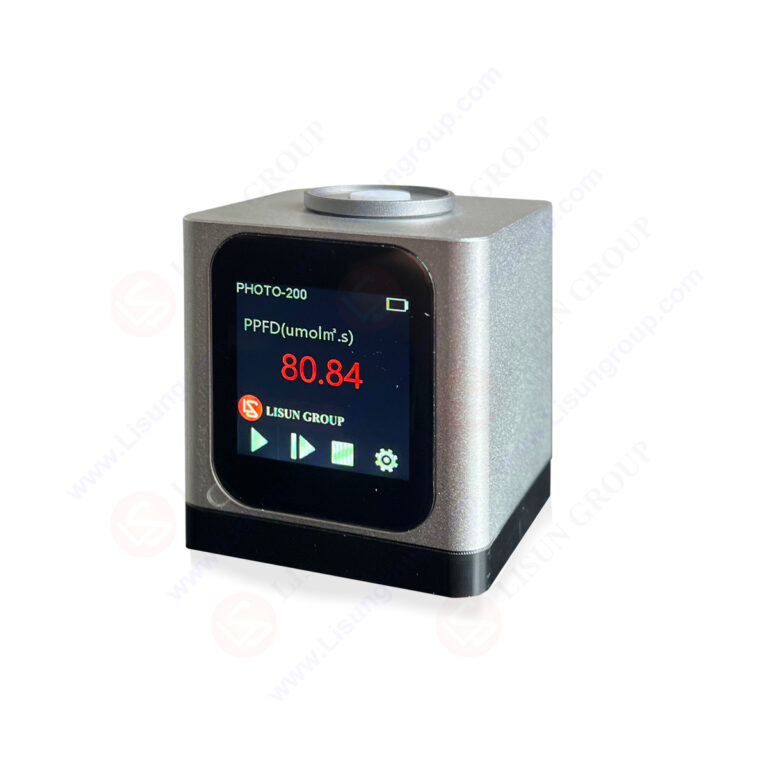
PHOTO-200 Lux Meter
Lux & Irradiance Meters
Handheld illuminance and irradiance measurement for field and site verification.
View Product Details →
ModelKey Specification 
PHOTO-200Class A accuracy, 12hr batteryView
Send an Enquiry →Send an Enquiry →

Related Reading

Where This Fits

Full photometric characterisation genuinely needs three different instrument types because they measure different things: LISUN's LSG-series goniophotometers (e.g. LSG-6000, LSG-1890B, LSG-1200A) measure how luminous intensity distributes across angles for LM-79-type reporting, LMS/LPCE-series integrating sphere systems (e.g. LPCE-2/LMS-9000, LMS-9500C) measure total luminous flux, and the same CCD spectroradiometer core gives spectral power distribution, CRI, and CCT. Sphere diameter should be sized to the largest luminaire to be tested — LISUN's range runs from Ø0.3m up to Ø3.0m — rather than chosen on accuracy class alone, since an undersized sphere self-absorbs light from large fixtures regardless of its wavelength accuracy.