Semi-Anechoic Chambers
The Compliance-Test Workhorse for Radiated Emissions and Immunity
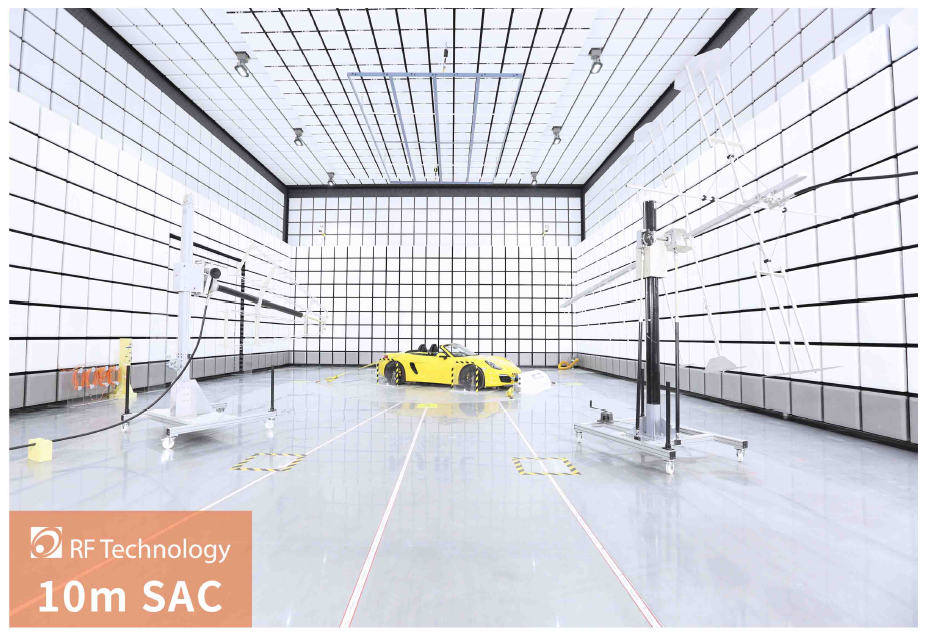
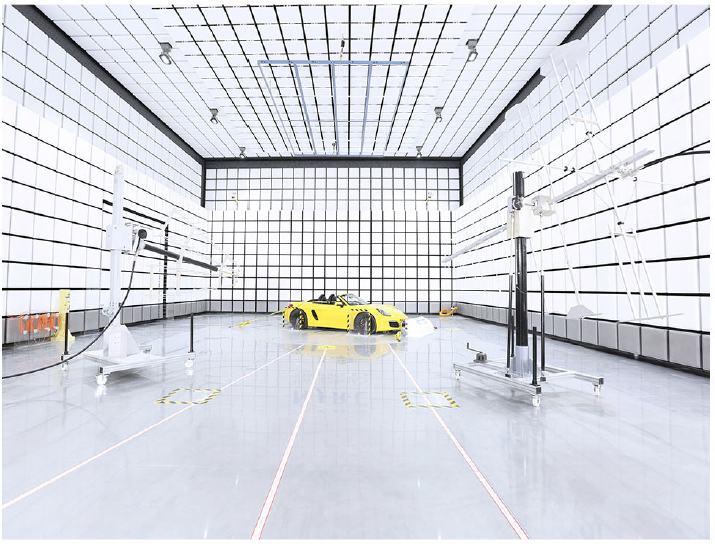
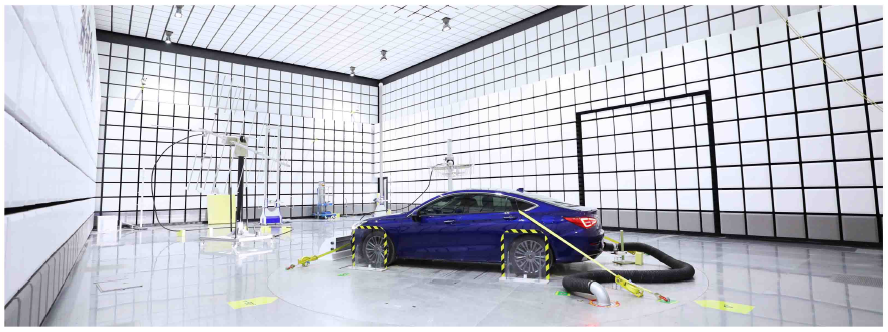
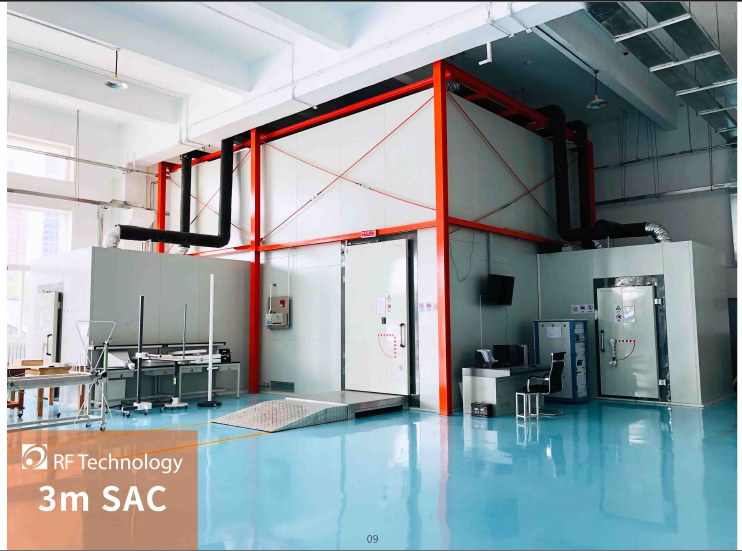
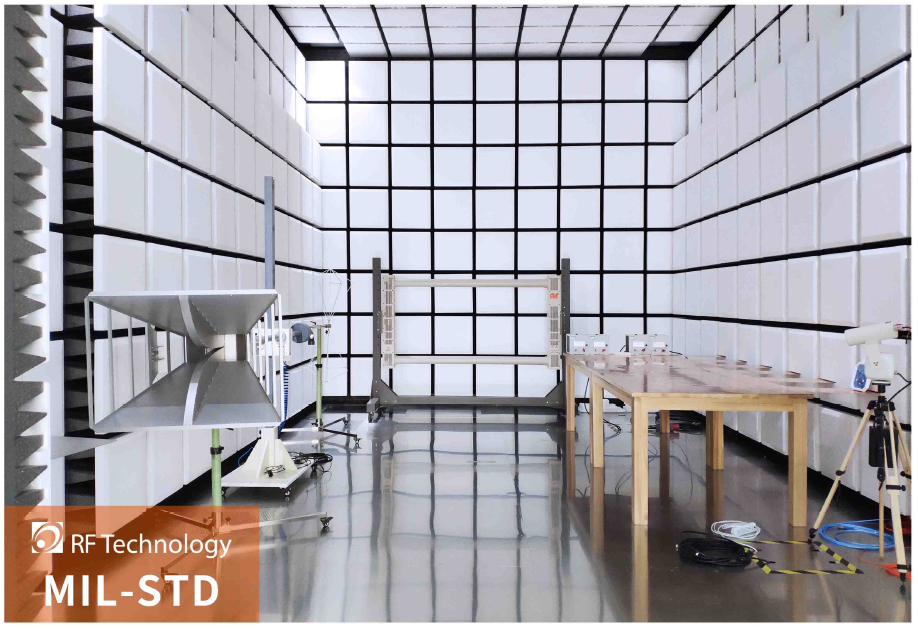
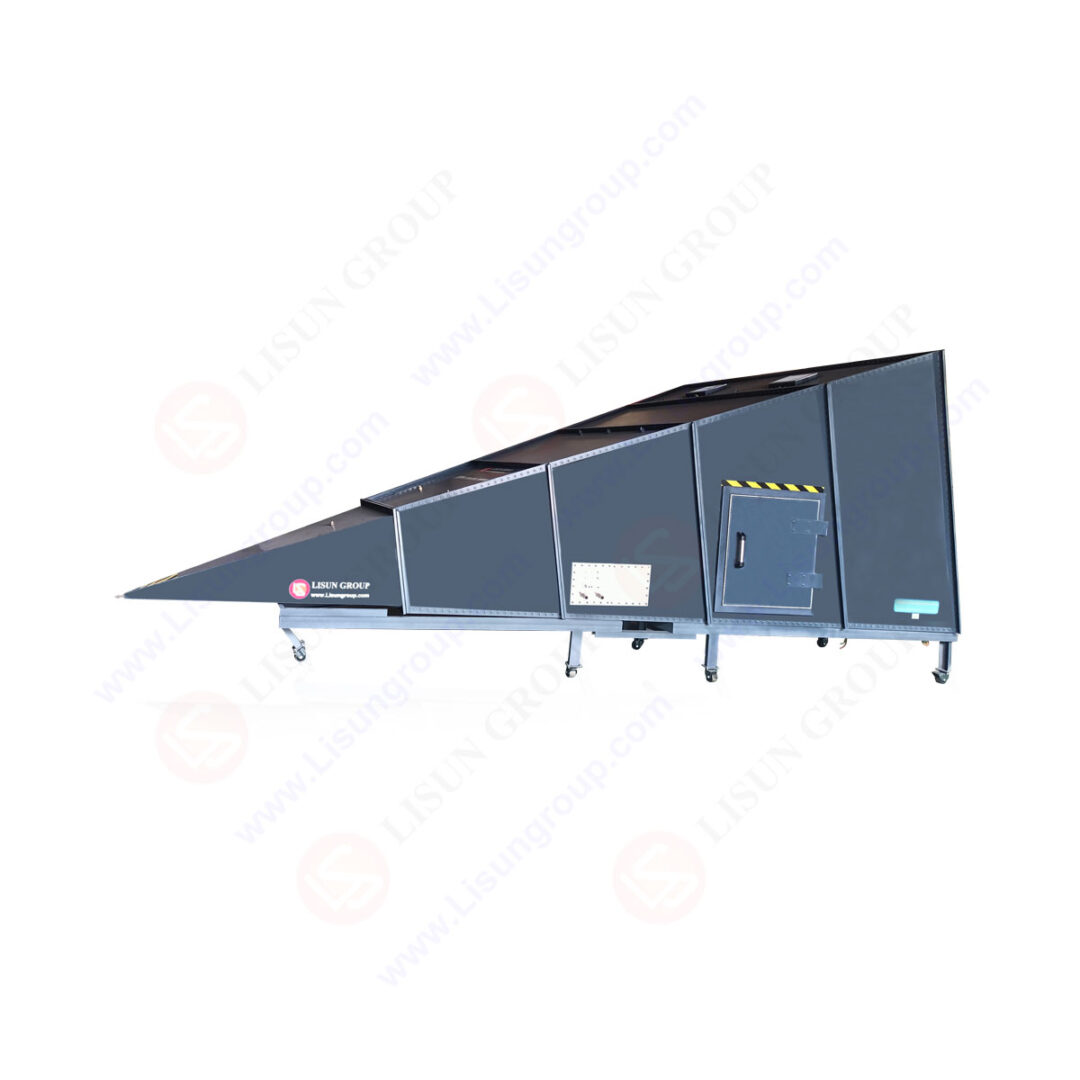
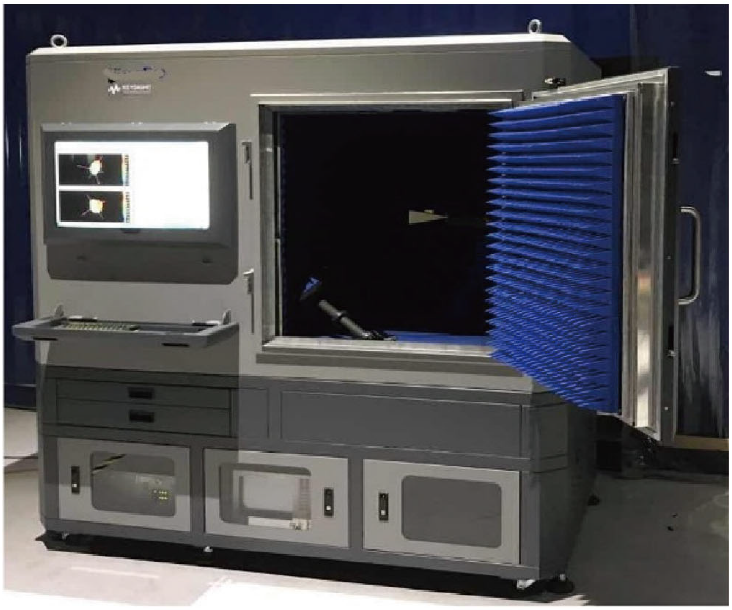
Most commercial EMC compliance testing — the radiated emissions and immunity testing required to demonstrate a product meets standards like CISPR and IEC 61000-4-3 — happens in a semi-anechoic chamber (SAC), the workhorse facility of EMC compliance testing generally. A SAC combines a conductive ground plane with absorber-lined walls and ceiling, creating a controlled test environment that supports accurate measurement for both emissions and immunity work within the same facility.
The conductive ground plane reflects RF energy in a defined, predictable way (unlike a fully anechoic chamber, which absorbs on all surfaces including the floor), which matches the ground-plane reflection that occurs in many real-world emissions and immunity test setups — this is why "semi" anechoic, rather than fully anechoic, is the standard configuration for most commercial compliance testing rather than an inferior compromise.
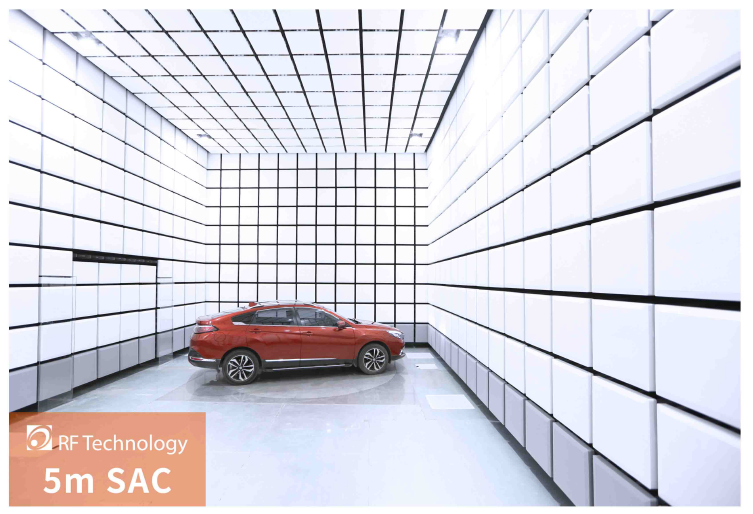
Chambers in this range scale from 3m measurement distance configurations suited to small component and device testing, through 5m configurations for mid-size equipment, up to 10m configurations capable of full vehicle testing — the largest 10m models including sliding gate vehicle access for driving a full vehicle directly into the chamber. Quiet zones (the calibrated, usable test volume within the chamber) range from 1.5m up to 8.0m depending on chamber size, defining how large a device under test the chamber can accurately accommodate.
Frequently Asked Questions
Why is a semi-anechoic chamber (with a reflective floor) the standard rather than a fully anechoic chamber?
Most real-world EMC test setups involve the device under test sitting on or near a ground plane, and standards like CISPR and IEC 61000-4-3 are written around that ground-plane-reflection scenario. A semi-anechoic chamber's conductive floor reproduces this reflection in a controlled, calibrated way, making it the appropriate and standard configuration for most commercial compliance testing rather than a compromise version of a fully anechoic chamber.
How do I choose between a 3m, 5m, and 10m chamber configuration?
The choice depends primarily on the size of equipment being tested and the standard's required measurement distance — 3m suits small components and devices, 5m covers mid-size equipment, and 10m (with vehicle access on the largest models) is needed for full vehicle EMC testing to automotive standards.
What does "quiet zone" mean in a semi-anechoic chamber specification?
The quiet zone is the calibrated volume within the chamber where field uniformity meets the required test standard's tolerance — the device under test needs to fit within this zone for the test to be valid, and quiet zone size (1.5m to 8.0m across this range) is a key factor in matching a chamber to the equipment it needs to test.