RF Test Matrices & Signal Sources
Automated Signal Routing and Control for Multi-Channel RF Test
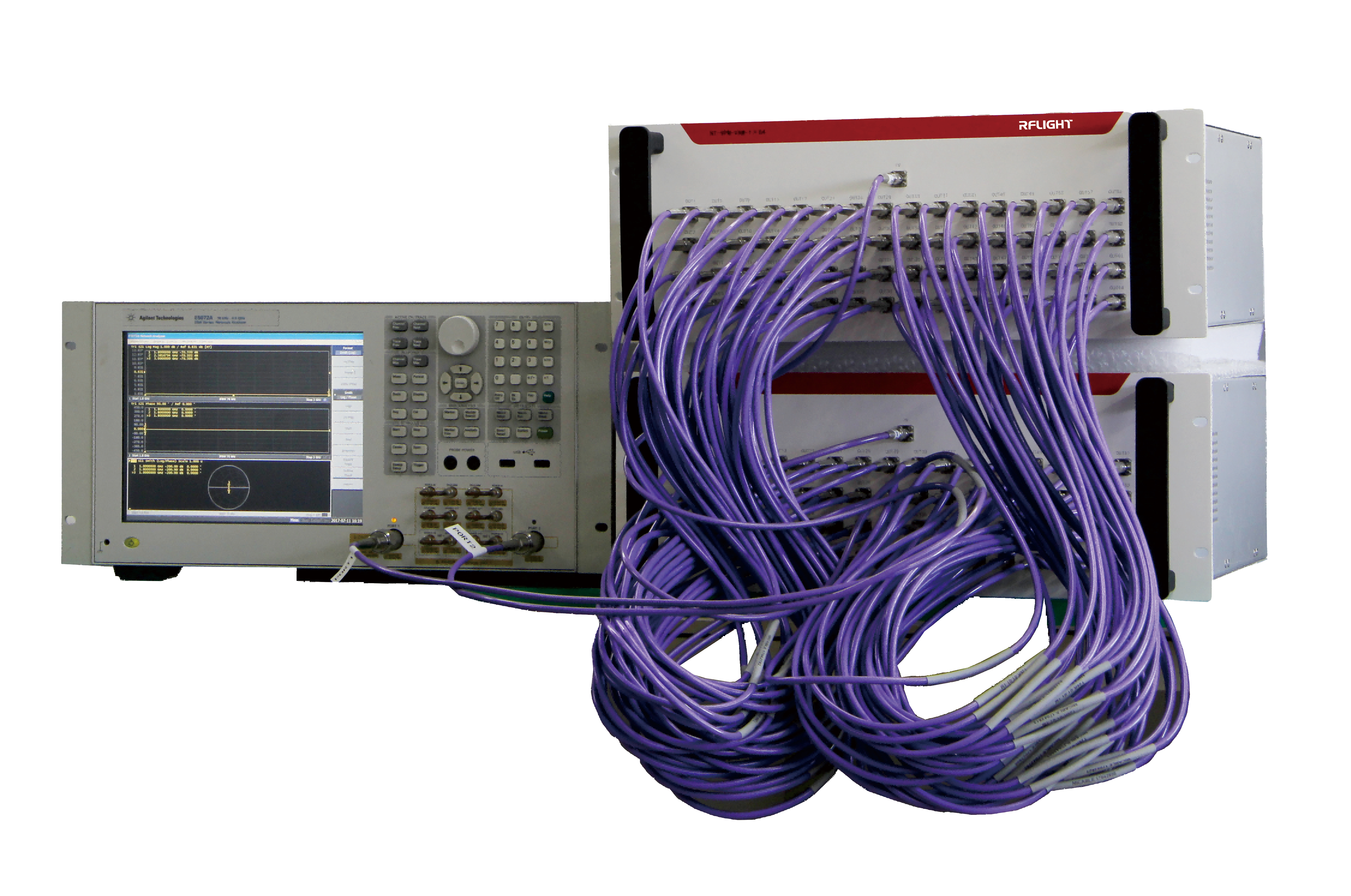
Testing modern multi-antenna systems — 5G massive MIMO arrays, phased array beamforming, or any OTA (over-the-air) test setup requiring precise control across dozens or hundreds of RF channels — simply isn't practical with manual signal routing and individually-set attenuators. RF test matrices automate signal routing, attenuation, and phase/amplitude control across multiple channels, forming essential infrastructure for automated EMC test labs and advanced multi-channel RF validation.
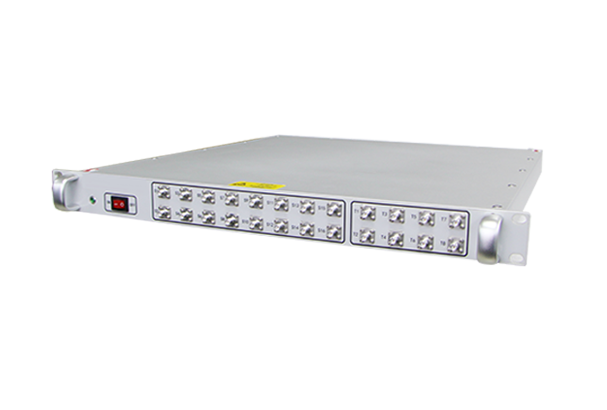
This range covers solid-state and mechanical switch matrices for automated signal routing between test paths, and amplitude and phase control matrices scaling up to 128×128 for MIMO OTA and phased array testing — a scale that reflects just how many independent RF paths a modern massive-MIMO or large phased-array test setup actually needs to control simultaneously. Programmable attenuation matrices support channel emulation, letting a test system reproduce realistic, independently-varying channel conditions across many paths at once rather than a single fixed attenuation setting applied uniformly.
RF signal generators are also included in this range, covering general immunity and RF test applications where a controllable, programmable signal source is needed alongside the routing and control matrix infrastructure — together forming the automated signal generation, routing, and control backbone a modern multi-channel RF test lab is built around.
Frequently Asked Questions
Why does MIMO OTA testing need matrices scaling up to 128×128?
Massive MIMO systems can involve very large numbers of antenna elements, and accurately testing their over-the-air performance requires independent phase and amplitude control across a correspondingly large number of RF paths simultaneously — a 128×128 matrix provides that scale of independent per-channel control that manual or smaller-scale switching simply can't match.
What's the difference between a switch matrix and an amplitude/phase control matrix?
A switch matrix routes an RF signal between different paths or destinations (connecting input A to output B, for example), while an amplitude/phase control matrix additionally manipulates the signal's amplitude and phase on each path — needed for applications like beamforming validation where the relative phase and amplitude relationships between channels, not just routing, is what's being tested.
What is channel emulation used for in RF test matrices?
Programmable attenuation matrices supporting channel emulation let a test system reproduce realistic, independently varying signal conditions across multiple RF paths — simulating real-world propagation effects like fading or path loss variation across channels, rather than testing only under idealised, fixed-attenuation conditions.