Home /
EMC Test Solutions

Conducted Emissions Test Systems

EMI receivers, AC and DC LISNs, and harmonics and flicker systems for mains conducted emissions testing.

Every electrical product puts some noise back onto its power leads, and that noise can travel through shared wiring to upset other equipment. Conducted emissions testing measures it, from 9kHz or 150kHz up to 30MHz, against CISPR limits.

The test needs an EMI receiver and a line impedance stabilisation network (LISN) that gives the product a standard supply impedance so results can be repeated and compared. This range covers the LISUN EMI-9K receivers, single and three-phase AC LISNs to 200A, a 1500V DC network for the DC side of PV inverters, and a complete harmonics and flicker system for IEC 61000-3-2 and 61000-3-3.

Conducted Emissions Test Systems
Inquire About This Range →

Which Conducted Emissions Equipment Do I Need?

A conducted emissions test measures the noise a product puts back onto its power leads. You need an EMI receiver and a network that connects the product to its supply: a LISN for AC mains or a DC network for PV inverters. Harmonics and flicker are separate low-frequency mains emission tests with their own analyser.

Go toYour testing
EMI receiverThe measuring instrument, 9kHz–30MHz and up
AC LISNMains-powered products, single phase to 36A or three phase to 200A
DC LISNDC side of PV inverters and DC power electronics, to 1500V / 200A
Harmonics and flicker systemMains harmonic current and flicker to IEC 61000-3-2 and 61000-3-3

Receiver and line networks

LISUN EMI-9K EMI ReceiverEMI-9KA / 9KB / 9KBS / 9KC

LISUN EMI-9K EMI Receiver

What it is: The measuring instrument at the heart of every emissions test. It scans across frequency and reports the interference level with the peak, quasi-peak and average detectors CISPR limits are written for. Each system ships with a LISN, isolation transformer, cable and PC software.

Use it for:

  • Conducted emissions with a LISN (all models)
  • Radiated emissions with an antenna, loop, CDNE or clamp (EMI-9KB and up)
  • Pre-compliance scans during design
Frequency9kHz–30MHz (9KA); 9kHz–300MHz (9KB, 9KBS); 9kHz–1GHz (9KC)
Accuracy±1dB (9KC, 9KBS); ±1.8dB (9KB, 9KA)
PreselectorYes on 9KC and 9KBS; none on 9KB and 9KA
DetectorsPeak, quasi-peak, average; 200Hz / 9kHz / 120kHz bandwidths
StandardsCISPR 16-1-1

Full details →

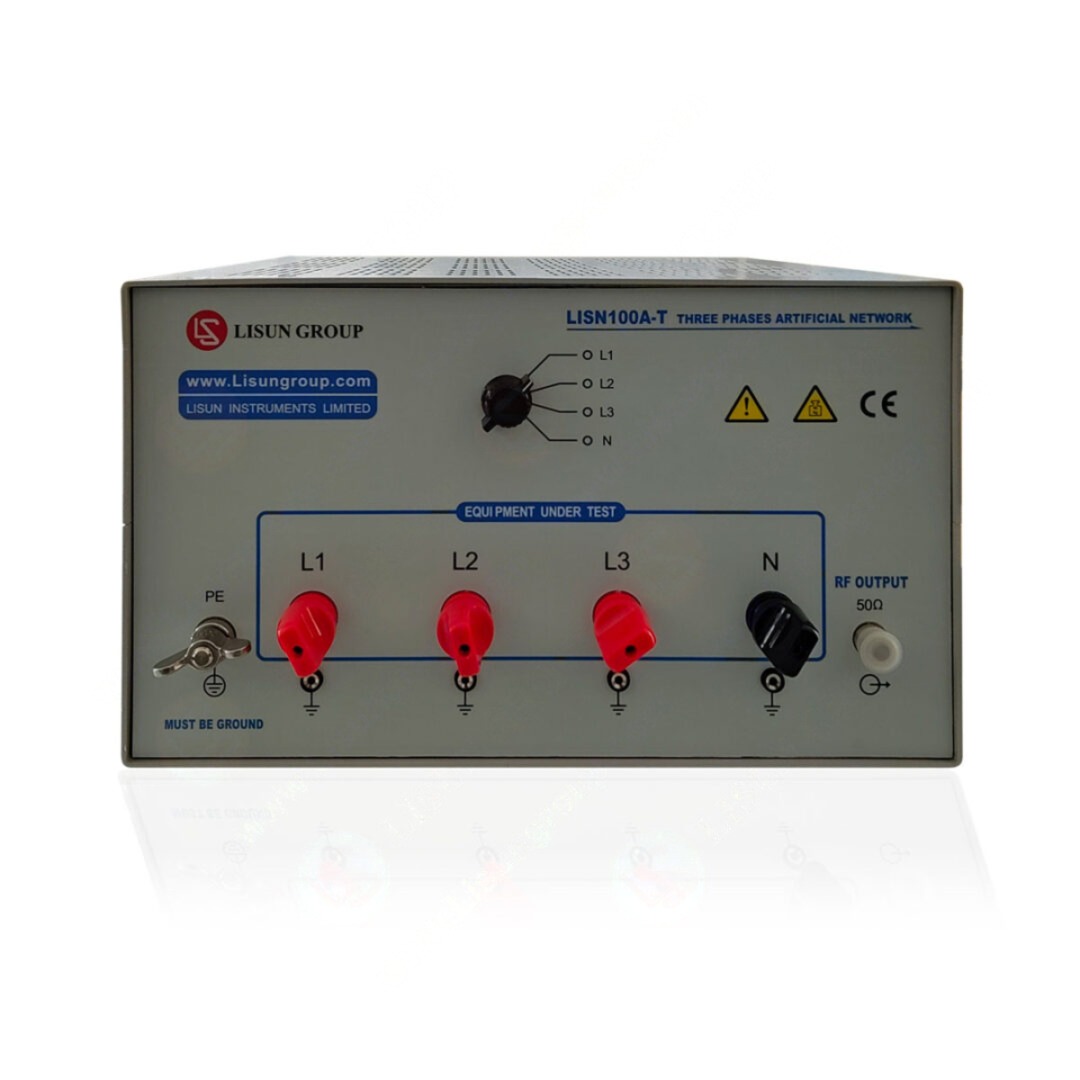
AC Line Impedance Stabilisation NetworkLISN-A / C / H, LISN50A–200A-T

AC Line Impedance Stabilisation Network

What it is: Sits between the mains and the product. It gives the product a standard supply impedance, blocks noise coming in from the building wiring, and gives the receiver a port to measure the interference voltage the product puts on its leads, so results can be compared between labs.

Use it for:

  • Lighting (CISPR 15), IT equipment (CISPR 32), appliances (CISPR 14-1)
  • Three-phase industrial equipment
Single phase5A (LISN-A), 16A (LISN-C), 36A (LISN-H); 250V
Three phase50A, 100A or 200A per line; 400V AC / 600V DC
Frequency9kHz–30MHz (A, C); 150kHz–30MHz (H, three phase)
StandardsCISPR 16-1-2

Full details →

DC Artificial Network for PV InvertersLISN-PVDC8301

DC Artificial Network for PV Inverters

What it is: PV inverters can push ripple currents back into their DC cables and panels, which then radiate. AC-side measurements miss this, so the DC side needs its own network. A switch selects common-mode, differential-mode or unsymmetrical measurement.

Use it for:

  • DC side of photovoltaic inverters
  • Other DC-powered power electronics
Rating1500V DC, 200A
Frequency150kHz–30MHz
Impedance150Ω ±30Ω common and differential mode
StandardsCISPR 16-1-2

Full details →

Mains harmonics and flicker

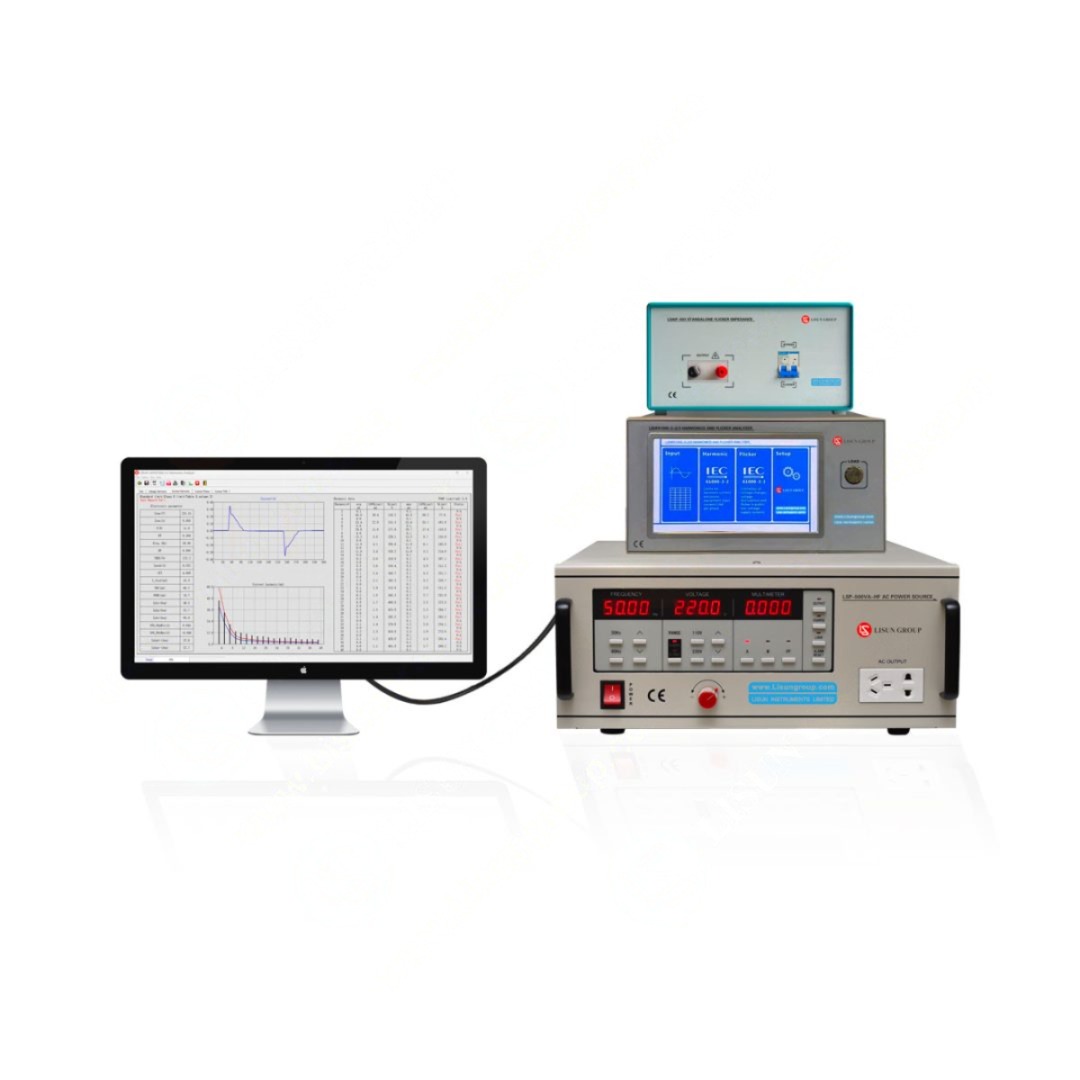
Harmonics and Flicker Test SystemLSHF61000-3 + LSAIF-503 + LSP-HF

Harmonics and Flicker Test System

What it is: A matched single-phase setup: analyser, flicker reference impedance and low-distortion AC source. It measures the harmonic currents a product draws (up to the 50th order, with Class A/B/C/D limits applied automatically) and the voltage flicker it causes, with a pass/fail result.

Use it for:

  • Appliances, LED drivers and lighting
  • Power adapters, chargers and consumer electronics
Measurement1–600V; 2mA–13.3A; single phase to 16A
AC source500VA to 5kVA, 0–300V
StandardsIEC 61000-3-2, IEC 61000-3-3

Full details →

Related Measurements

Lighting and appliance standards also include lead-based radiated methods: the CDNE (CISPR 15, 30–300MHz) and the absorbing clamp (CISPR 14-1, 30MHz–1GHz). They use the same receiver and are on our radiated emissions page. Automotive (CISPR 25) and aerospace (DO-160) conducted tests use 5µH networks and current probes rather than a 50µH LISN; see our CISPR 25 guide. Looking for the LISUN LFCI61000-19 differential-mode system (IEC 61000-4-19)? That is an immunity test: see the LFCI61000-19 and our conducted immunity range. Read more: LISN selection for conducted emissions.

Related EMC Test Types
Radiated Immunity Test Systems
Testing how a product copes with strong radio fields
Radiated Emissions Test Systems
Testing what your product radiates, not just its susceptibility
Conducted Immunity Test Systems
Testing susceptibility to disturbances injected via cables
ESD Simulators
ESD Simulators
Electrostatic discharge immunity testing
Send an Enquiry →Send an Enquiry →

Related Reading

Understanding the Test Setup

Conducted emissions testing measures the noise a product feeds back onto its power leads.

Harmonics and flicker are a separate test of how the product's current draw distorts the mains waveform, using an analyser, a flicker reference impedance and a clean AC source.