LISN Artificial Mains Network (CISPR 16-1-2) – LISUN
LISUN LISN artificial mains networks to CISPR 16-1-2 for conducted EMI tests: single phase 5A to 36A, three phase 50A to 200A, 9kHz or 150kHz to 30MHz.
Enquire About This Product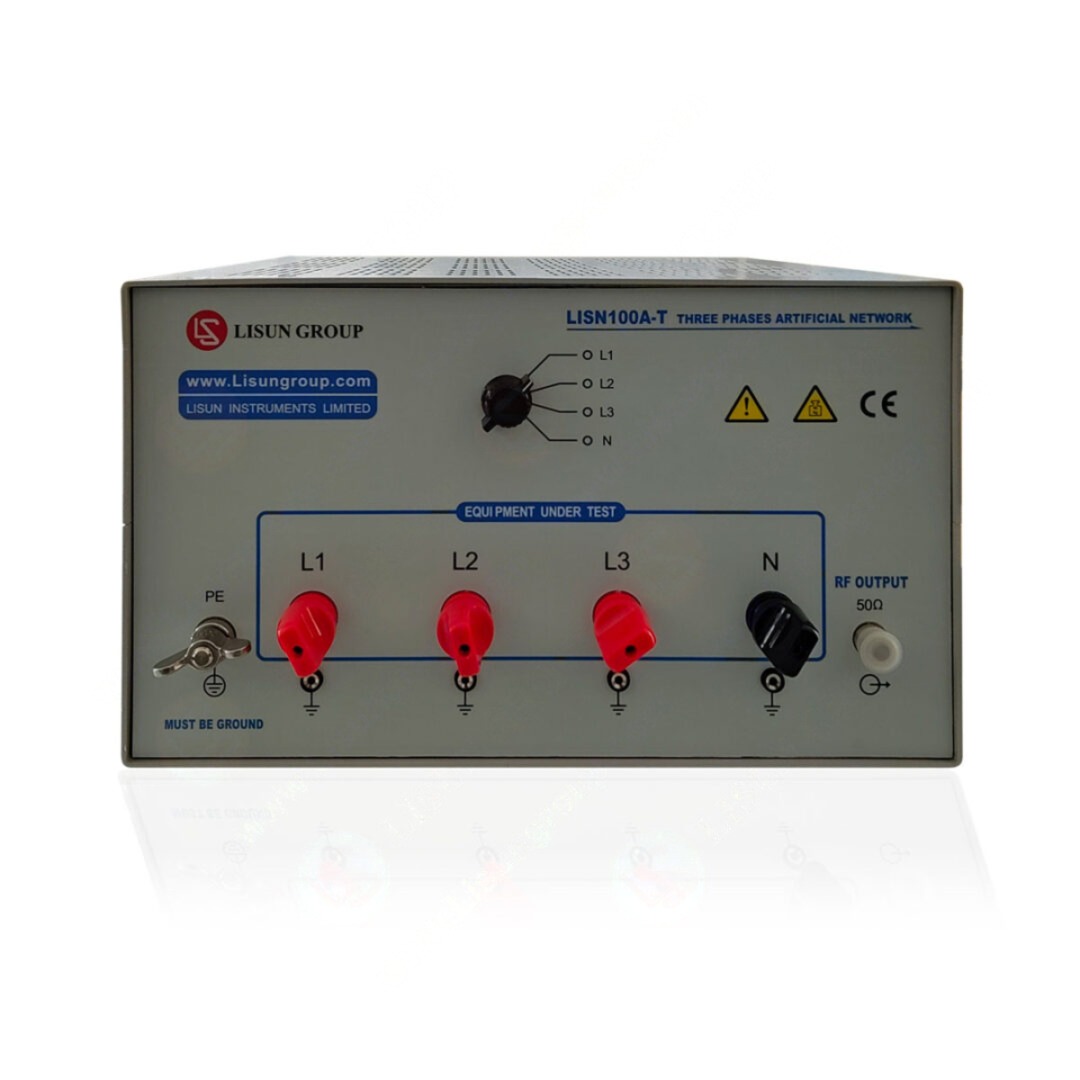
Overview
A line impedance stabilisation network (LISN), also called an artificial mains network (AMN), sits between the mains supply and the product under test during a conducted emissions test. It presents a standard impedance across the 9kHz to 30MHz test band, blocks noise coming in from the mains, and gives the EMI receiver a measurement port where it can pick up the interference voltage the product puts onto its power leads.
Because the impedance is standardised, results do not depend on the local mains and can be repeated and compared between labs. LISUN's range covers single-phase products from 5A to 36A and three-phase products up to 200A per line, and is used for conducted emission certification of lighting, IT equipment and similar products.
Key Specifications
| Specification | LISN-A | LISN-C | LISN-H | LISN50A-T | LISN100A-T | LISN200A-T |
|---|---|---|---|---|---|---|
| Max EUT current | 5A | 16A | 36A | 50A ×4 | 100A ×4 | 200A ×4 |
| Max EUT voltage | AC/DC 250V, 50/60Hz | AC 400V / DC 600V, 50/60Hz | ||||
| Lines | Single phase: L/N/PE | Three phase: L1/L2/L3/N | ||||
| Impedance | (50μH + 5Ω) ∥ 50Ω | 50μH ∥ 50Ω | ||||
| Frequency range | 9kHz~30MHz | 150kHz~30MHz | ||||
| Standard | CISPR 16-1-2:2014 Tables 1 and 2 | CISPR 16-1-2:2014 Table 2 | ||||
Features
- Standard impedance to CISPR 16-1-2
- Single phase 5A to 36A
- Three phase 50A to 200A per line
- 9kHz–30MHz (LISN-A, LISN-C)
- Works with LISUN EMI-9K and other receivers
Applications
- Conducted emissions of lighting to CISPR 15
- IT and multimedia equipment to CISPR 32
- Household appliances to CISPR 14-1
- Three-phase industrial equipment
Frequently asked questions
Which LISN do I need?
Pick by the current your product draws and whether it is single or three phase. The LISN-C (16A) covers most household and lighting products.
What is the difference between the impedances?
The LISN-A and LISN-C use the 50μH + 5Ω ∥ 50Ω network, which works down to 9kHz. The LISN-H and the three-phase models use 50μH ∥ 50Ω, specified from 150kHz.