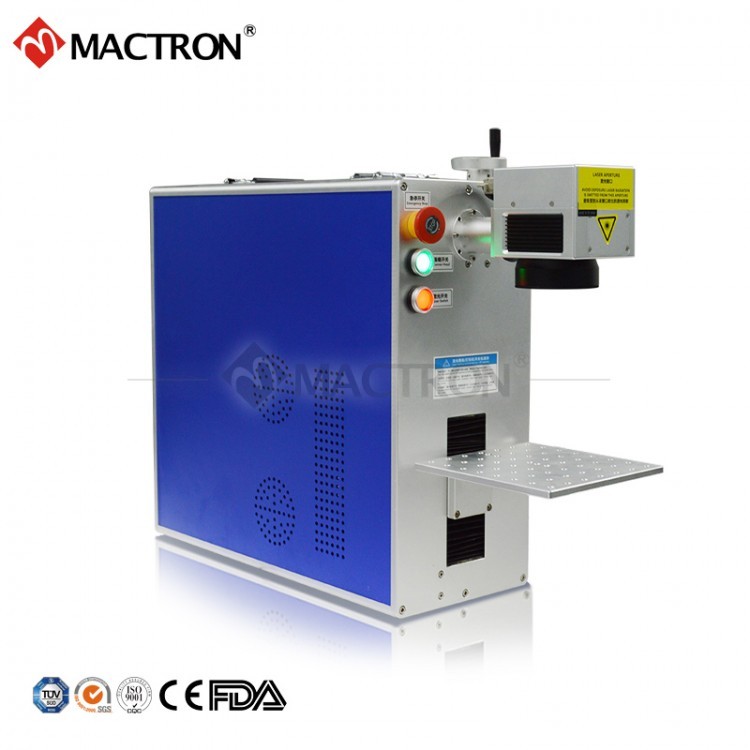
Laser Marking, Engraving & Scanning Systems
Fiber, UV, and CO2 Laser Marking from Portable Handheld to Full Workstation
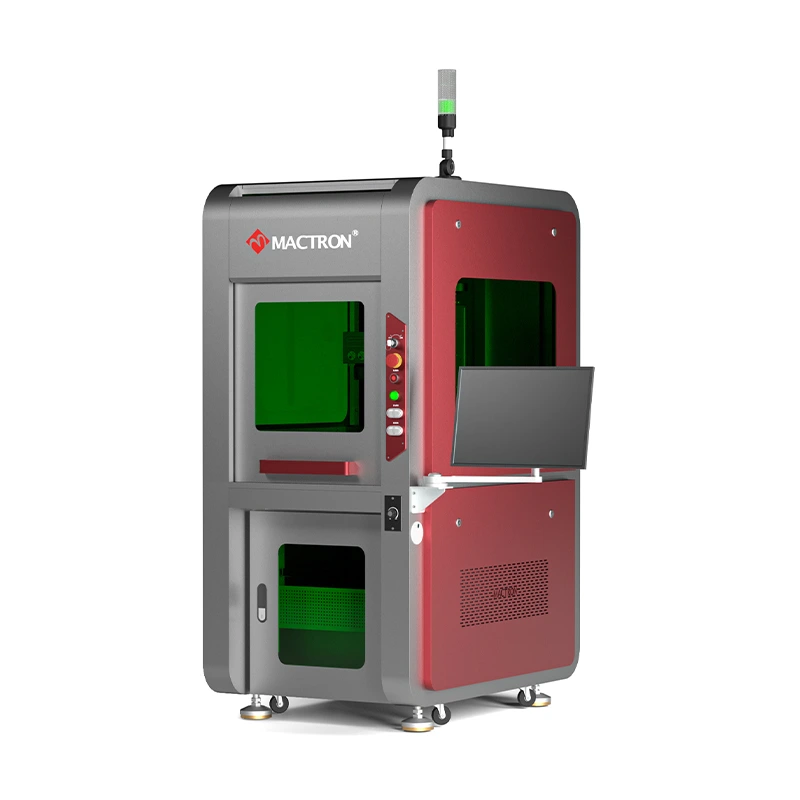
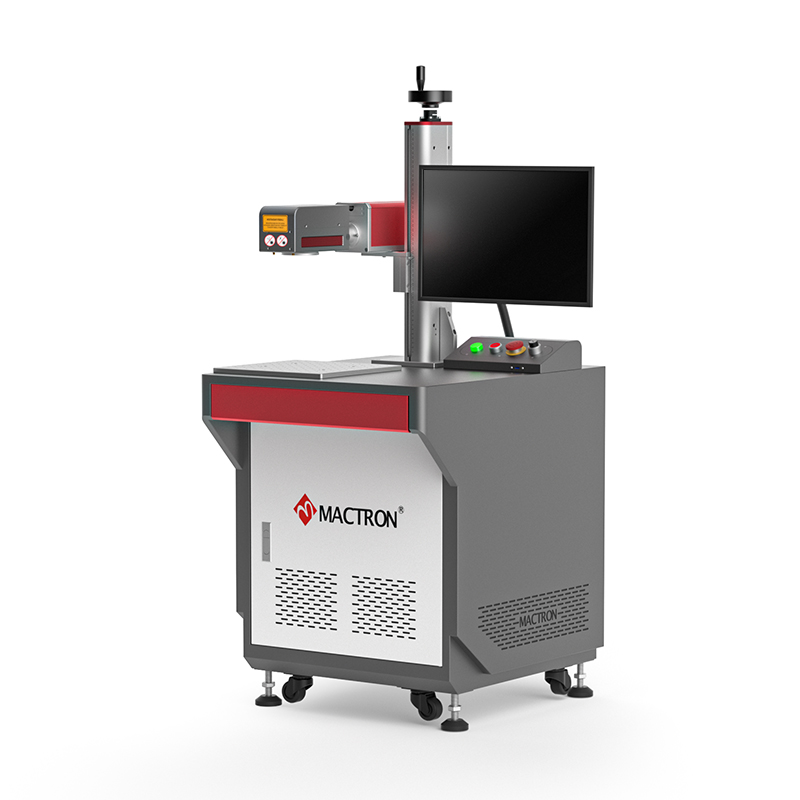
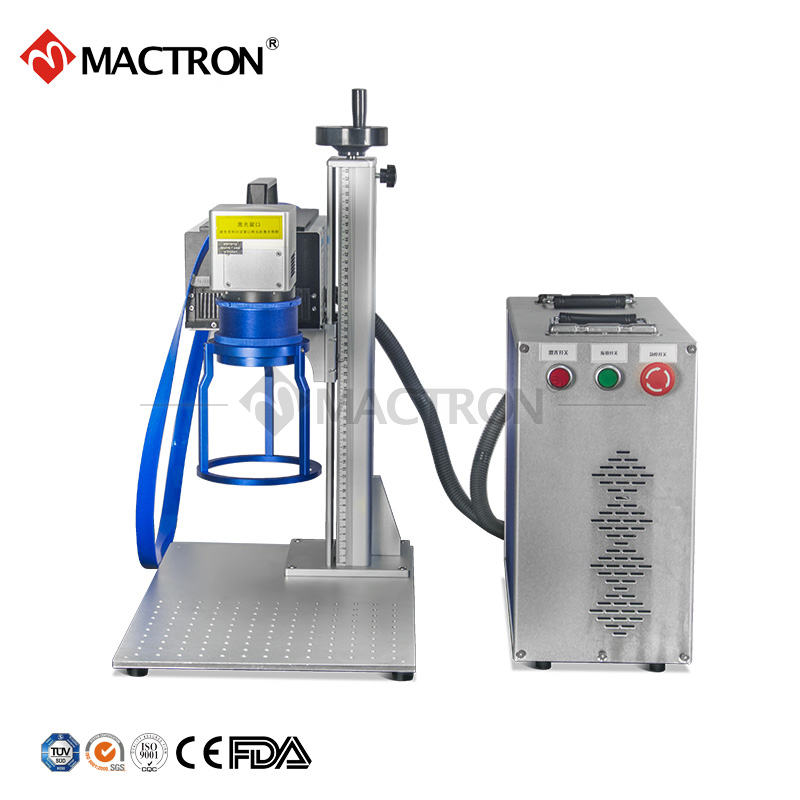
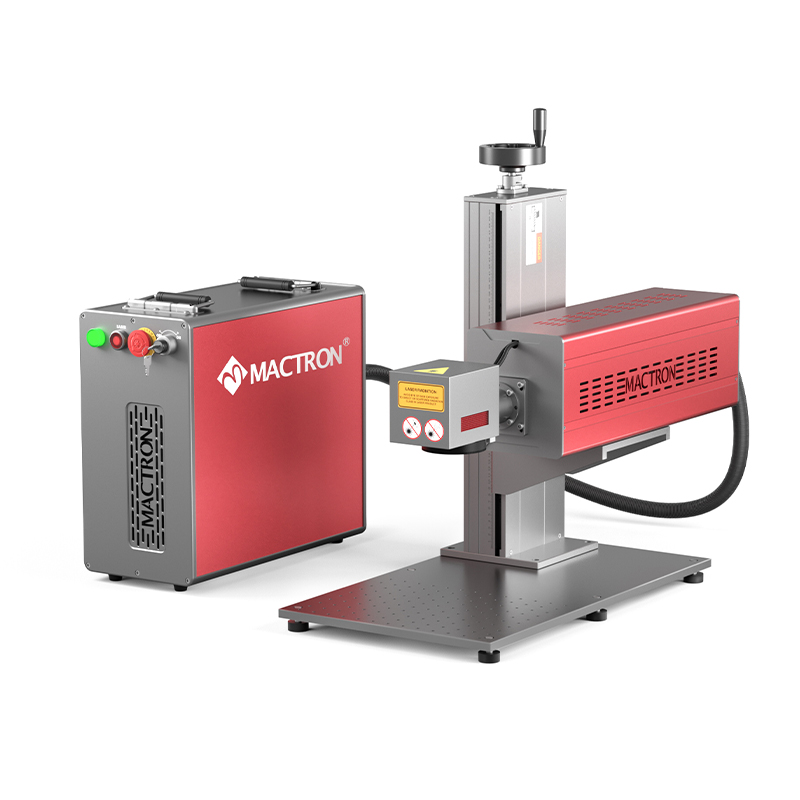
Permanent, high-contrast marking on metals, plastics, and organic materials calls for genuinely different laser technology depending on the material being marked — a wavelength that marks metal cleanly can be entirely unsuitable for heat-sensitive plastics or organic materials, and vice versa. Mactron's MT Series spans this full range: fiber laser markers for metals, UV laser markers for heat-sensitive and fine-detail work, CO2 laser markers for organic and non-metal materials, and dedicated 3D engraving and scanning systems for complex geometries.
Fiber laser marking and engraving covers the widest power range in this series, from 20W to 300W across portable handheld units and fully enclosed marking workstations, with fiber sources rated for laser lifetimes up to 100,000 hours. Higher-power variants in this range add deep engraving and even cutting capability, while a dedicated 3-axis dynamic focus configuration handles curved-surface and deep engraving work where a fixed-focus system would lose accuracy as the marking depth or surface curvature changes.
UV laser marking at 355nm operates as a cold process — its shorter wavelength interacts with material through a fundamentally different mechanism than thermal marking, minimizing the heat input that would damage heat-sensitive materials or plastics. This makes UV marking the right choice for fine-detail work and materials that a thermal fiber or CO2 laser would scorch or deform. CO2 laser marking at 10.6μm wavelength, by contrast, is built specifically for organic and non-metal materials — plastics, ceramics, wood, and packaging — where fiber and UV wavelengths don't couple efficiently with the material's absorption characteristics. A dedicated galvanometer-based 3D scanning system, compatible with all the laser wavelengths in this range, supports custom marking-system integration where a standard fixed marking head configuration doesn't fit the application.
Frequently Asked Questions
Why does UV laser marking suit heat-sensitive materials better than fiber or CO2 marking?
UV marking at 355nm works through a "cold" photochemical interaction with the material surface rather than primarily a thermal one, meaning it introduces far less heat into the material during marking. This matters for heat-sensitive plastics, thin coatings, or fine-detail work where thermal marking methods would scorch, melt, or otherwise visibly damage the surrounding material.
Why does CO2 laser marking exist separately from fiber laser marking, given the overlap in materials they can mark?
Fiber lasers (near-infrared wavelength) couple efficiently with metals but poorly with many organic materials, while CO2 lasers (10.6μm, far-infrared) couple efficiently with organic materials like plastics, wood, and ceramics but are much less effective on metal. The two technologies address largely non-overlapping material categories rather than being interchangeable options for the same job.
When does 3D dynamic focus or a scanning system matter over a standard fixed marking head?
A standard fixed-focus marking head assumes a flat surface at a known distance, but curved surfaces, deep engraving where the marking depth changes the effective focal distance, or custom system integration where the marking head needs to be positioned dynamically, all require the marking head to adjust focus or position on the fly — which is what 3D dynamic focus and galvanometer-based scanning systems are built to do.