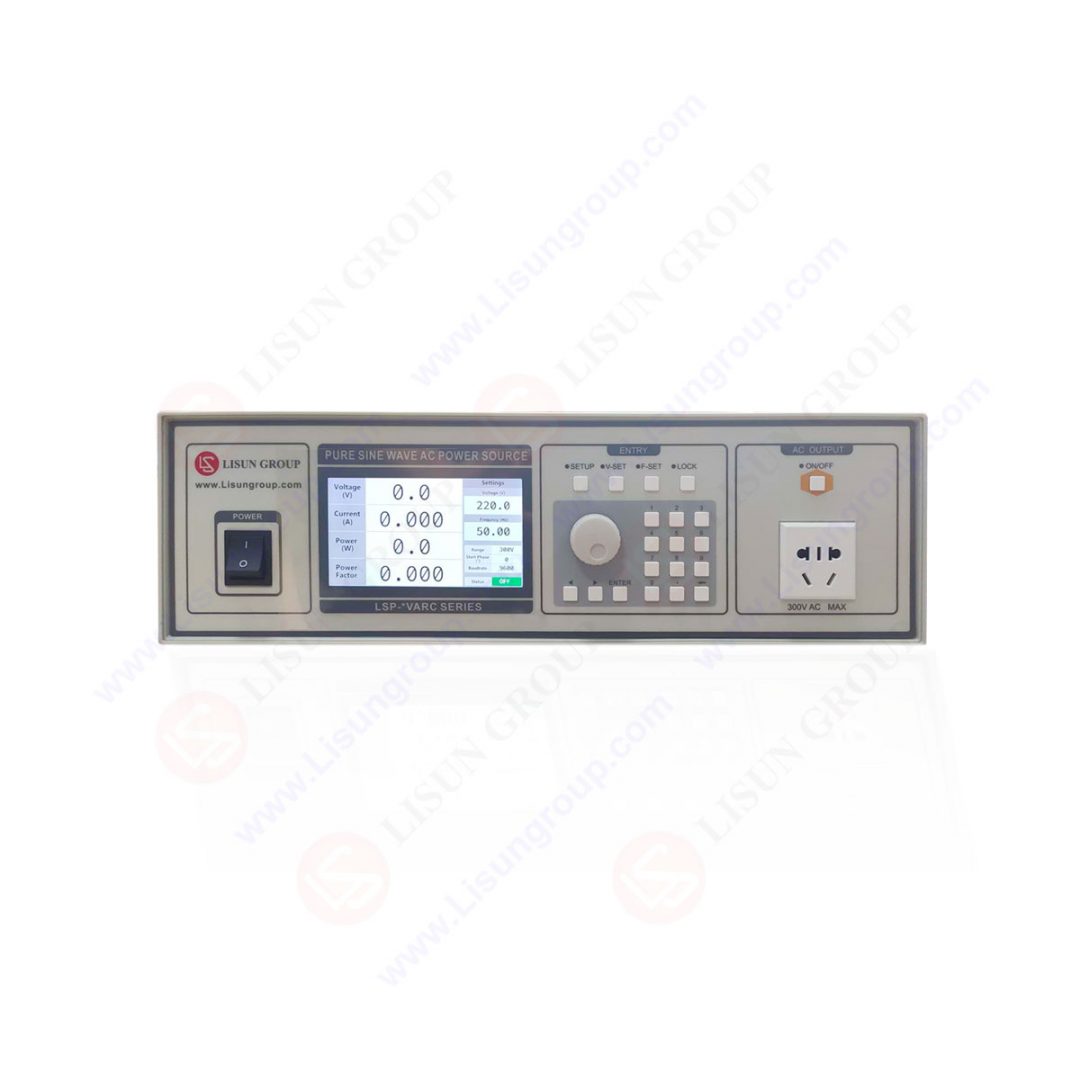
Precision AC Power Source
Low-Distortion AC Power for LED and Luminaire Test
Characterising an LED or luminaire's actual electrical performance — power consumption, power factor, current draw — depends on the AC supply feeding it being clean and stable enough that any distortion measured is coming from the device under test, not from the power source itself. LISUN's precision AC power sources are purpose-built for this: low-distortion sine wave output specifically engineered for LED and luminaire test benches.
Total harmonic distortion as low as 0.3% keeps the supply's own waveform quality well within what accurate lighting characterisation requires, and frequency stability to ±0.05% over 30 minutes ensures a test run doesn't drift meaningfully over the course of a longer measurement sequence — relevant for photometric and electrical tests that can run considerably longer than a quick spot-check. Frequency range covers 45-70Hz, spanning the standard mains frequencies products are tested against across different markets.
A practical advantage built into these sources: integrated voltage, current, and power measurement removes the need for separate metering equipment on the test bench. Rather than feeding a clean AC supply to a device under test and then connecting a separate power analyser to measure the result, the source itself provides that measurement directly — simplifying the test setup and removing one potential source of measurement error introduced by connecting additional external instrumentation.
Frequently Asked Questions
Why does AC source distortion matter for LED and luminaire testing specifically?
LED drivers and luminaires are sensitive to input waveform quality, and power factor and harmonic current measurements taken during testing need to reflect the device's own behaviour rather than being confounded by distortion already present in the supply feeding it. A low-THD source (0.3% here) ensures the measured results reflect the test article, not the test equipment.
What's the benefit of integrated measurement versus a separate power analyser?
Using a separate power analyser adds an additional instrument to the test setup, additional cabling, and a potential source of measurement discrepancy between what the source outputs and what the analyser reads. Integrated measurement in the source itself removes that gap, simplifying the bench setup and calibration chain.
Why does frequency stability matter over a 30-minute measurement window?
Some photometric and electrical characterisation tests run considerably longer than a quick spot measurement, and if the source's frequency drifts during that window, it can introduce inconsistency into the results being gathered over the test duration. The ±0.05% stability specification ensures the supply conditions stay consistent across a realistic test run length.