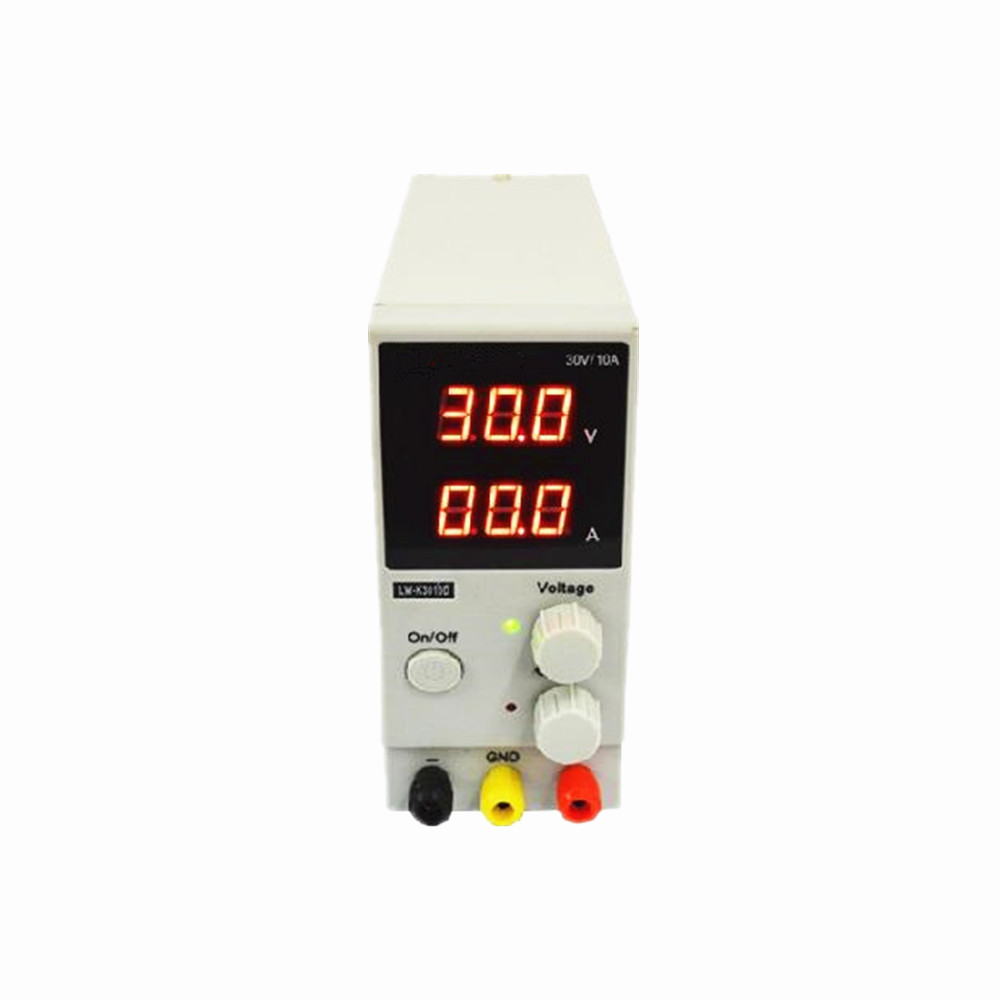
General Bench Power Supplies
Reliable General-Purpose AC and DC Bench Supplies
Not every bench power requirement calls for programmable disturbance simulation, regenerative energy recovery, or the extended feature sets built into precision test platforms — a great deal of everyday lab, field service, and educational work simply needs a dependable, adjustable source of constant-voltage or constant-current power. This range covers exactly that segment: general-purpose AC and DC bench supplies built for straightforward power delivery rather than advanced test functionality.
The distinction from Finch's ActionPower and Preen precision ranges is deliberate rather than a step down in quality — those platforms are engineered for dynamic response, programmability, and (in ActionPower's case) regenerative bidirectional operation, capabilities that carry a corresponding cost and complexity. Where a task is genuinely simple — powering a circuit under development, supplying a field service tool, or supporting educational lab exercises — that complexity is unnecessary overhead rather than a benefit, and a general-purpose supply covers the requirement at a more appropriate cost point.
Both AC and DC output options are available within this range, covering the majority of basic power delivery tasks across laboratory, field, and educational settings without requiring a buyer to select from a large specification matrix — the emphasis here is on straightforward operation and dependable performance for tasks where that's genuinely what's needed.
Frequently Asked Questions
When should I choose a general-purpose bench supply instead of a precision test platform?
Where the task is straightforward voltage or current delivery — powering a circuit, supporting field service work, or general lab and classroom use — a general-purpose supply covers the requirement without the added cost of programmability, dynamic response, or regenerative capability that a dedicated test platform like ActionPower or Preen offers for more demanding applications.
What's the practical difference between constant-voltage and constant-current operation?
Constant-voltage mode holds output voltage steady regardless of load current draw (up to the supply's current limit), suited to powering voltage-sensitive circuits. Constant-current mode instead holds output current steady regardless of load voltage, suited to applications like battery charging or LED testing where controlling current matters more than a fixed voltage.
Are these supplies suitable for educational lab use?
Yes — their straightforward operation and general-purpose specification make them well suited to educational settings, where the priority is reliable, easy-to-operate equipment for teaching basic electrical principles rather than advanced test capability that a classroom setting typically doesn't need.