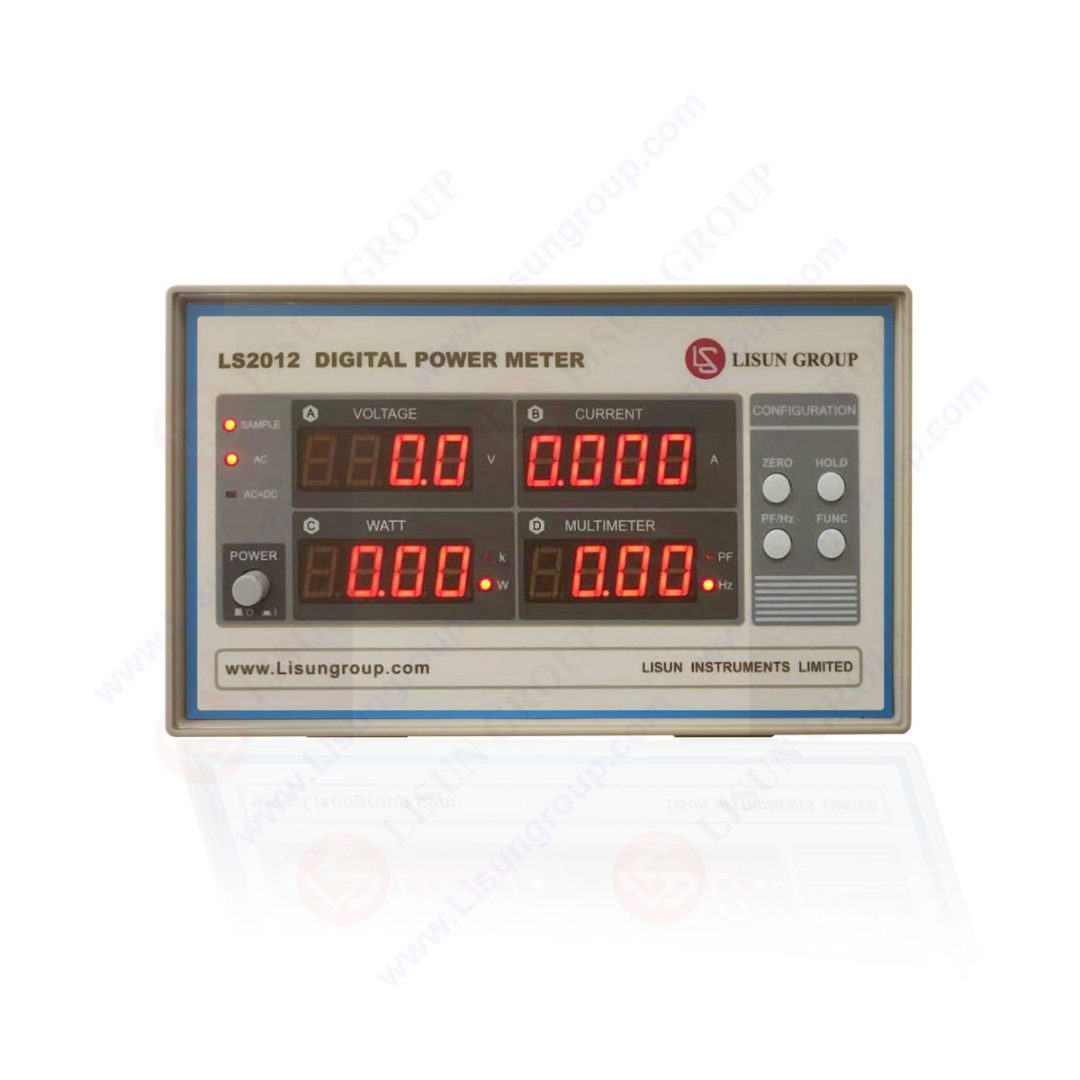
Digital Power Meter
Precision Power Measurement for Lighting and Electrical Test
Accurate power measurement underpins most electrical and lighting test work, and the meter doing that measurement needs to be at least as accurate as the tolerance the test itself is trying to verify — a lamp efficacy test claiming a specific lumens-per-watt figure is only as trustworthy as the power measurement behind the watts. LISUN's digital power meter range is built for this role specifically, measuring AC and DC voltage, current, power, and power factor with accuracy classes down to 0.2%.
These meters are commonly integrated as the underlying power measurement instrument behind other test systems — LED and lamp testing systems, integrating spheres, and goniophotometers all need a trusted power reference feeding into their overall measurement chain, and this range is designed to serve that role rather than operate only as a standalone bench meter. Frequency response spans a genuinely wide range, from 0.5Hz through 100kHz, covering everything from mains-frequency lamp testing to higher-frequency driver and switching power supply characterisation within the same instrument family.
Voltage range covers 1V to 600V, and current measurement resolves down to 0.005A, letting the same meter family serve both low-power device characterisation (where fine current resolution matters) and higher-power measurement tasks without needing a separate instrument for each end of the range.
Frequently Asked Questions
Why does a power meter need to measure across such a wide frequency range (0.5Hz-100kHz)?
Different test applications operate at very different frequencies — mains-frequency lamp and appliance testing sits around 50/60Hz, while LED driver and switching power supply characterisation can involve much higher switching frequencies. A single meter family covering this full range means the same instrument platform serves multiple test applications rather than requiring separate meters for each frequency regime.
What does "0.2% accuracy class" actually mean for test confidence?
The accuracy class defines the maximum measurement error the meter is specified to have relative to true value — 0.2% means readings are guaranteed accurate to within that tolerance. For tests where the product specification itself has a tight tolerance, using a meter with meaningfully tighter accuracy than the spec being verified is standard practice, so the measurement uncertainty doesn't consume the specification's own margin.
Why would this meter be integrated into a goniophotometer or integrating sphere system rather than used standalone?
Photometric test systems like goniophotometers and integrating spheres measure light output, but a complete lighting test also needs the electrical input data (power, power factor) to calculate efficacy and other combined electrical-photometric metrics. Integrating a trusted power meter directly into these systems provides that electrical measurement without needing a separate, independently-calibrated instrument bolted onto the setup.