Laser Cutting Systems
High-Precision Fiber Laser Cutting for Stainless Steel and Carbon Steel Sheet
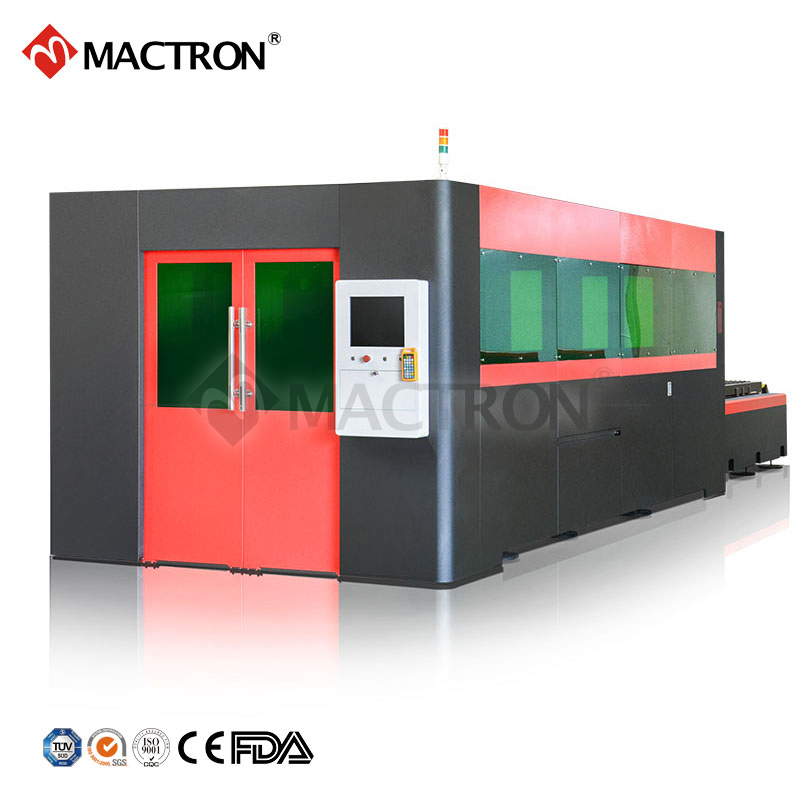
Cutting stainless steel and carbon steel sheet mechanically — with shears, plasma, or traditional blades — trades off speed, precision, and edge quality in ways that fiber laser cutting largely avoids. A focused, high energy density beam melts and vaporizes material along a precisely controlled path, producing a clean cut edge at speeds mechanical methods can't match. Mactron's MT-3015FC Series brings this capability to industrial sheet metal fabrication, built around CCD camera positioning, an integrated shock-proof frame, and an optical marble platform for high-speed cutting stability.
CCD camera automatic positioning matters particularly for cutting pre-printed or patterned material, where the cutting path needs to track a printed design rather than a fixed programmed path — the camera detects the actual material position and pattern in real time, letting the system adjust the cut path to match rather than assuming perfect material alignment. The integrated shock-proof frame and optical marble platform work together to keep the cutting head stable and accurately positioned at the cutting speeds a modern fiber laser system is capable of, since any frame flex or vibration at high speed directly translates into cut-edge inaccuracy.
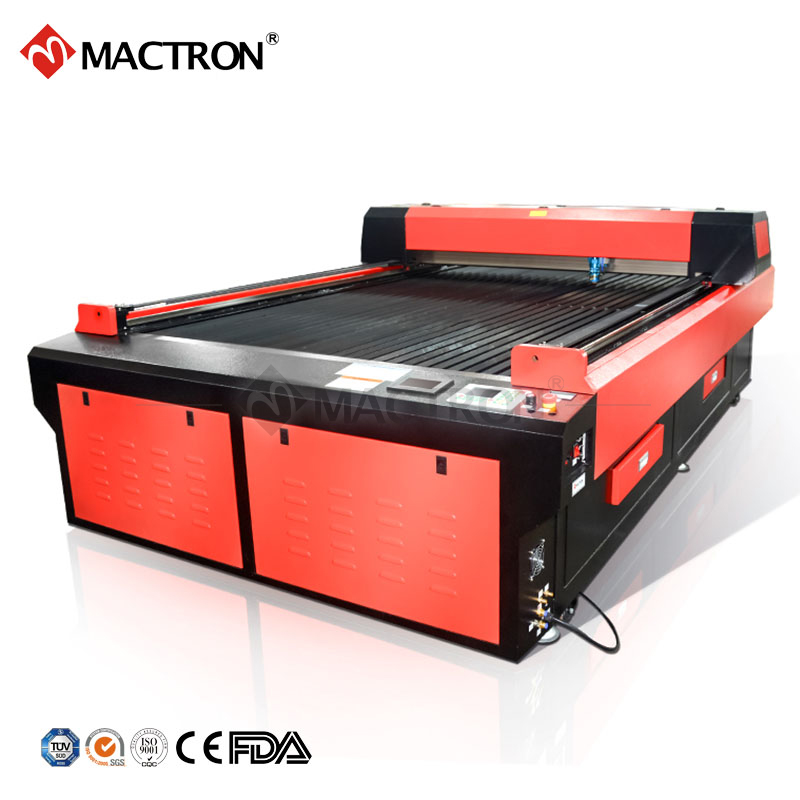
The 500W fiber laser configuration handles standard stainless and carbon steel sheet cutting work, while the range also extends to a steel-welded-frame variant with automatic focus and a dual-head auto-feeding configuration built for textile and embroidery cutting applications — a different material category entirely, but one that benefits from the same core laser cutting precision applied to fabric rather than metal.
Frequently Asked Questions
Why does fiber laser cutting outperform mechanical cutting methods for sheet metal?
A fiber laser beam concentrates enough energy density at a small spot to melt and vaporize metal almost instantly along the cut path, producing a narrow, clean cut with minimal mechanical stress on the surrounding material — mechanical cutting methods like shearing or sawing introduce physical force that can deform, burr, or stress the material, and generally can't match the cutting speed or precision a laser achieves on thinner sheet stock.
What does CCD camera positioning add for pattern-based cutting work?
CCD camera positioning lets the system detect the actual position and orientation of a pre-printed pattern or material feature in real time and adjust the cutting path to track it, rather than assuming the material is perfectly aligned to a fixed programmed path — relevant for pre-printed sheet, patterned material, or any job where material placement can vary slightly from one piece to the next.
Why does frame and platform stability matter at high cutting speeds?
At the cutting speeds a modern fiber laser is capable of, even small amounts of frame flex or vibration translate directly into cut-path inaccuracy — the beam position needs to stay precisely where the control system commands it throughout the entire cutting motion. The integrated shock-proof frame and optical marble platform are built to hold that positioning accuracy at speed rather than only at a slow, careful pace.