ESD-CDM Charged Device Model ESD Tester – LISUN
LISUN ESD-CDM charged device model ESD test system for ICs to ANSI/ESDA/JEDEC JS-002, IEC 60749-28 and AEC-Q100-011: ±50V to ±6kV, 20A current probe.
Enquire About This Product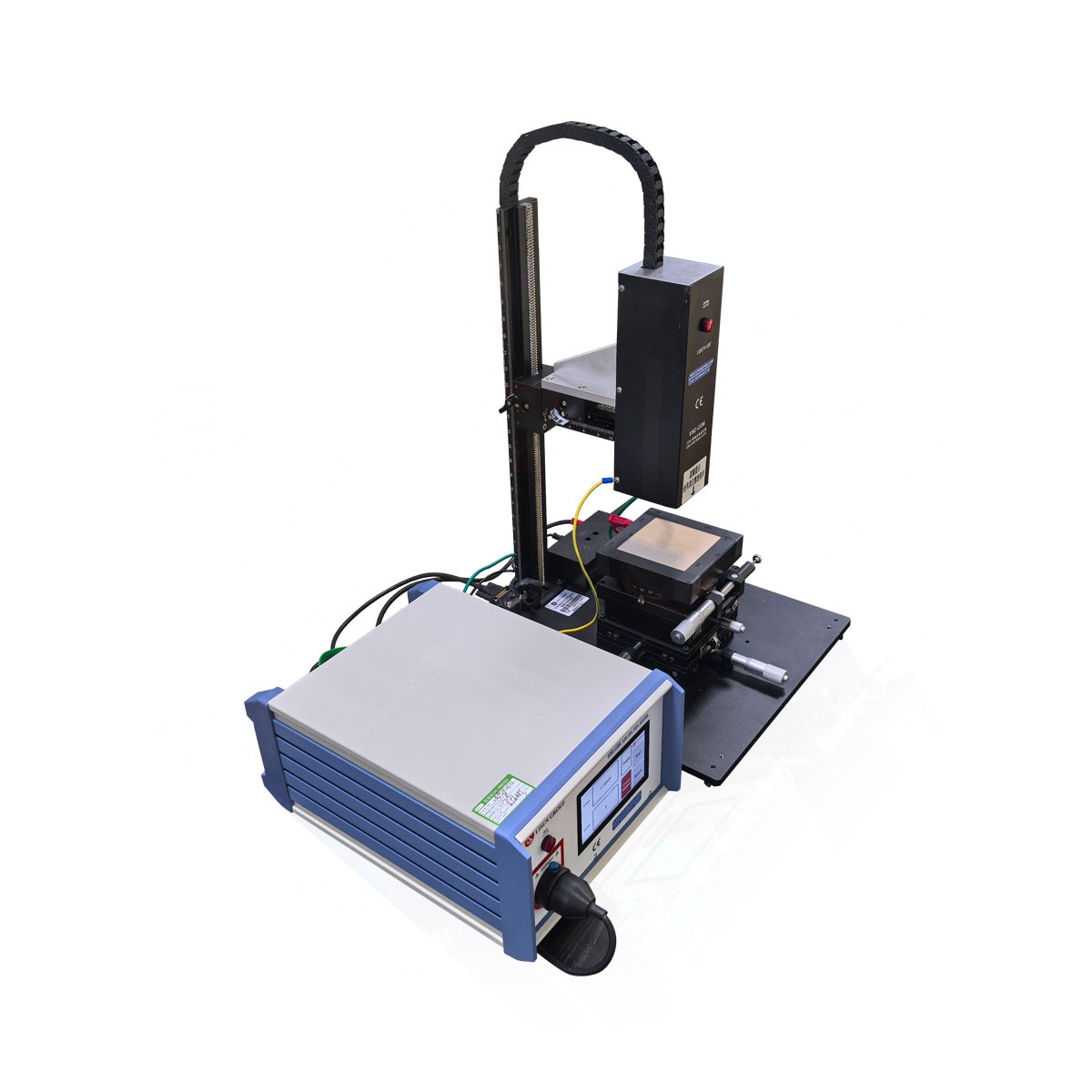
Overview
In automated handling, a semiconductor device can pick up charge through friction or induction and then discharge in nanoseconds when a pin touches a grounded fixture, board or machine. This charged device model (CDM) discharge is a common cause of hidden chip damage, and JS-002, IEC 60749-28 and AEC-Q100-011 define how to test for it.
The ESD-CDM charges the device by induction from a high-voltage plate and then discharges it through a test probe, measuring the current pulse. It has three parts: a DC high-voltage source, the main test instrument with induction and isolation plates on an X/Y/Z positioning stage, and the current probe with attenuator for connection to an oscilloscope. Voltage error is within ±3%, and an English/Chinese Android touch screen sets up tests and stores voltage and current waveforms. It can share a host with the ESD-883D to test HBM, MM and CDM on one platform.
Key Specifications
| Part | Specification |
|---|---|
| DC high-voltage source | |
| Output range | ±50V~6kV |
| Accuracy | ±(3% of reading + 10V) |
| Test instrument | |
| Insulation | Built-in high-voltage isolation for the induction plate |
| Positioning | X/Y/Z stage, 0~10cm travel, 0.1mm resolution (manual) |
| Induction plate | 12×12cm, 2mm |
| Isolation plate | 12×12cm, 0.4mm FR4 (per JESD22-C103) |
| Test probe | |
| Peak current | ≥20A |
| Probe | Ø1.5×10mm, approx. 3mm travel |
| Movement | Vertical, programmed or manual, 0.1~5cm/s |
| Signal output | Dedicated attenuator and cable to oscilloscope |
| Ground plate | 63.5×63.5×6.35mm |
Features
- Field-induced CDM test to JS-002
- ±50V to ±6kV charging voltage
- Precise X/Y/Z pin positioning
- Current probe rated to 20A
- Waveform capture and storage
- Shares a host with the ESD-883D
Applications
- IC reliability qualification
- Automotive ICs to AEC-Q100-011
- Failure analysis of handling damage
Frequently asked questions
How does the CDM test work?
The device sits pins-up on the isolation plate above a charged induction plate, so it takes on charge by induction. The probe then touches each pin in turn, discharging the device, and the current waveform is measured.
What else do I need?
An oscilloscope with enough bandwidth to capture the fast CDM current pulse; the ESD-CDM provides the attenuator and cable to connect it.