Passive Intermodulation (PIM) Testers
Identifying Hidden Intermodulation Distortion in Passive RF Components
Passive components — connectors, cables, filters, antennas — aren't supposed to generate any new signal content of their own, but under multi-carrier RF load, imperfect metal-to-metal contacts and material nonlinearities can create intermodulation products that silently degrade network performance, particularly troublesome because the fault often isn't visible until it's actively interfering with a live signal. PIM (passive intermodulation) testers identify exactly this hidden distortion before it becomes an operational problem.
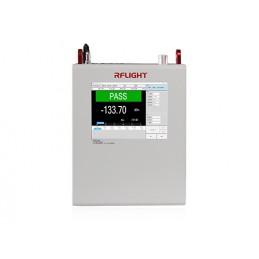
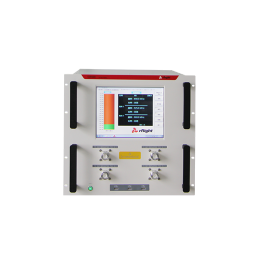
This is a critical test for cellular base stations, DAS (Distributed Antenna System) installations, and any shared RF infrastructure where multiple carriers or frequencies share the same passive RF path — PIM generated by a marginal connector or corroded joint can degrade receiver sensitivity across an entire site, and finding the source without dedicated test equipment is often impractical. The range spans desktop bench testers suited to component qualification and production QC, cabinet/rack systems built for R&D and production-line testing at higher throughput, and portable field testers specifically for testing installed antenna systems and base stations on-site.
Specialised POI (Point of Intercept), blind, and heterodyne multi-order variants extend the range for advanced characterisation work — applications needing to identify PIM sources more precisely, test without disrupting a live carrier, or characterise higher-order intermodulation products beyond standard testing.
Frequently Asked Questions
Why does PIM matter specifically for cellular base stations and DAS installations?
These installations carry multiple carrier frequencies through shared passive RF infrastructure (antennas, feeders, connectors), and PIM generated anywhere along that shared path can create interference that degrades receiver sensitivity across the whole site — a fault that's often invisible without dedicated testing since it only manifests as reduced network performance rather than an obvious component failure.
What's the difference between a bench tester and a portable field tester for PIM?
A bench tester is suited to controlled component-level qualification and production QC in a lab or manufacturing environment, while a portable field tester is built to test installed, in-service antenna systems and base stations on-site — a different form factor and typically different feature set for testing a live installation rather than an individual component before deployment.
What does "blind" PIM testing mean?
Blind PIM testing methodologies allow PIM measurement without needing to disrupt or take down a live carrier signal already in service — a specialised technique relevant to testing operational sites where taking the system offline for standard testing isn't practical.