Microwave Passive Components
Power Dividers, Combiners, and Filters from VLF to 40GHz
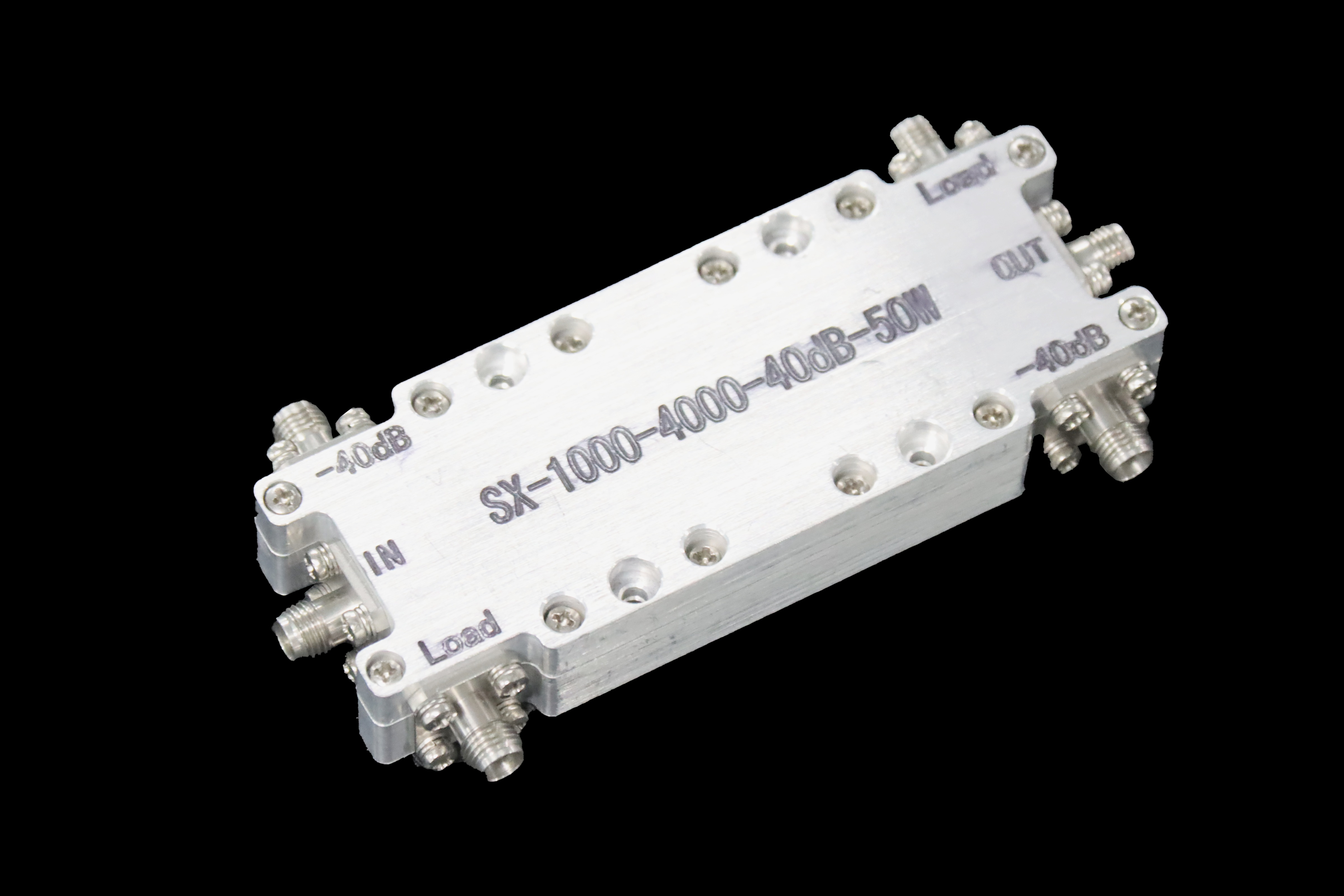
Routing and conditioning RF signal power between amplifiers, antennas, and test equipment — without adding active gain or introducing unwanted noise — is a job for passive components, and getting this connective infrastructure right matters just as much to overall test system performance as the active amplifiers and sources it connects. This range covers the power dividers, combiners, couplers, and filters that perform exactly this routing and conditioning role.
Power dividers and combiners are available across waveguide, radial, series-feed, and hybrid topologies, spanning VLF through 40GHz — different topologies suit different frequency ranges and power-handling requirements, and having multiple types available lets the right topology be matched to the specific application rather than forcing one design to cover an unsuitable frequency or power range. Broadband filters handle band selection, isolating a desired frequency range from unwanted signals, while couplers provide signal sampling for monitoring and protection purposes similar to their role elsewhere in an RF chain.
Beyond dividers, combiners, and filters, the full RFlight passive component catalogue extends to attenuators, isolators, circulators, and connectors, available in custom and OEM configurations — giving a system integrator access to the complete set of passive building blocks an RF test system or custom RF chain typically requires.
Frequently Asked Questions
Why are multiple power divider/combiner topologies (waveguide, radial, series-feed, hybrid) offered rather than one universal design?
Different topologies have different strengths across frequency range, power handling, and physical size — a topology well suited to VLF or low-microwave frequencies may not scale efficiently to 40GHz, and vice versa. Offering multiple topologies lets the component actually match the application's frequency and power requirements rather than compromising with a one-size-fits-all design.
What's the difference between an isolator and a circulator in this passive component range?
Both are non-reciprocal devices that control signal direction, but an isolator specifically blocks reflected signal from returning to a source (protecting sensitive equipment from reflections), while a circulator routes signal between multiple ports in a defined sequence — both serve protective and routing functions in an RF chain, but for different specific purposes.
Are custom or OEM configurations available for these components?
Yes — beyond the standard catalogue, custom and OEM configurations are available across the RFlight passive component range, useful where a standard part doesn't exactly match a specific system integration requirement.